The skills section of your CV helps recruiters understand what you can bring to a role. When written well, it makes your most relevant abilities easy to identify and supports the experience described elsewhere in your CV.
However, many candidates make the same mistake: they list broad terms such as “communication”, “leadership” and “teamwork” without showing how those skills relate to the job.
A stronger approach is to select skills that match the vacancy, describe them accurately and support important claims with evidence from your work experience.
Whether you are applying for your first job, progressing into management or changing careers, this guide explains how to create a relevant skills section for the UK job market.
If you are building your CV from scratch, start with our guide to how to write a CV for jobs in the UK.
1. What Is the Skills Section of a CV?
The skills section is where you highlight the abilities most relevant to your target role.
Depending on your profession, these might include:
Technical knowledge
Software proficiency
Industry-specific expertise
Communication and stakeholder management
Project management
Leadership and team development
Data analysis and reporting
Customer service
Planning and organisation
The right skills depend on the job. A software developer, an HR manager and a customer service adviser will need different combinations.
Your objective is not to list everything you can do. It is to highlight the capabilities that make you suitable for the position.
2. Which Skills Should You Include on a UK CV?
Start with the job description and identify the capabilities the employer values most.
Then compare those requirements with your actual experience.
Most CV skills fall into three broad categories.
Technical skills
These are practical abilities, tools or specialist knowledge required to perform a job.
Examples include:
Microsoft Excel and advanced spreadsheet analysis
SQL and database querying
Financial modelling
Payroll administration
CAD software
CRM platforms
Digital marketing analytics
Project management software
Include the tools and technologies you can genuinely use. If a role requires advanced Excel, for example, simply listing “Microsoft Office” may not communicate your proficiency clearly enough.
Transferable skills
Transferable skills can be applied across different roles or industries.
Examples include:
Problem-solving
Planning and organisation
Communication
Time management
Research
Negotiation
Customer relationship management
Process improvement
These are especially valuable when changing careers or applying for a role in a different sector.
Leadership and management skills
For supervisory, managerial and senior positions, relevant examples may include:
Team leadership
Performance management
Budget control
Stakeholder management
Strategic planning
Resource allocation
Change management
Commercial decision-making
Choose skills that reflect the level of responsibility you have actually held.
3. How Many Skills Should You Include?
There is no fixed number that suits every CV.
As a practical starting point, consider including around 6–12 relevant skills, depending on your experience, profession and CV length.
For a graduate or entry-level candidate, a shorter list of relevant technical and transferable skills may be sufficient.
For an experienced professional, a focused skills section can highlight specialist expertise and management capabilities.
Avoid including a long list simply to fill space. A shorter, relevant section is usually more useful than an extensive collection of generic terms.
4. Where Should the Skills Section Appear?
The placement depends on your experience and the type of role.
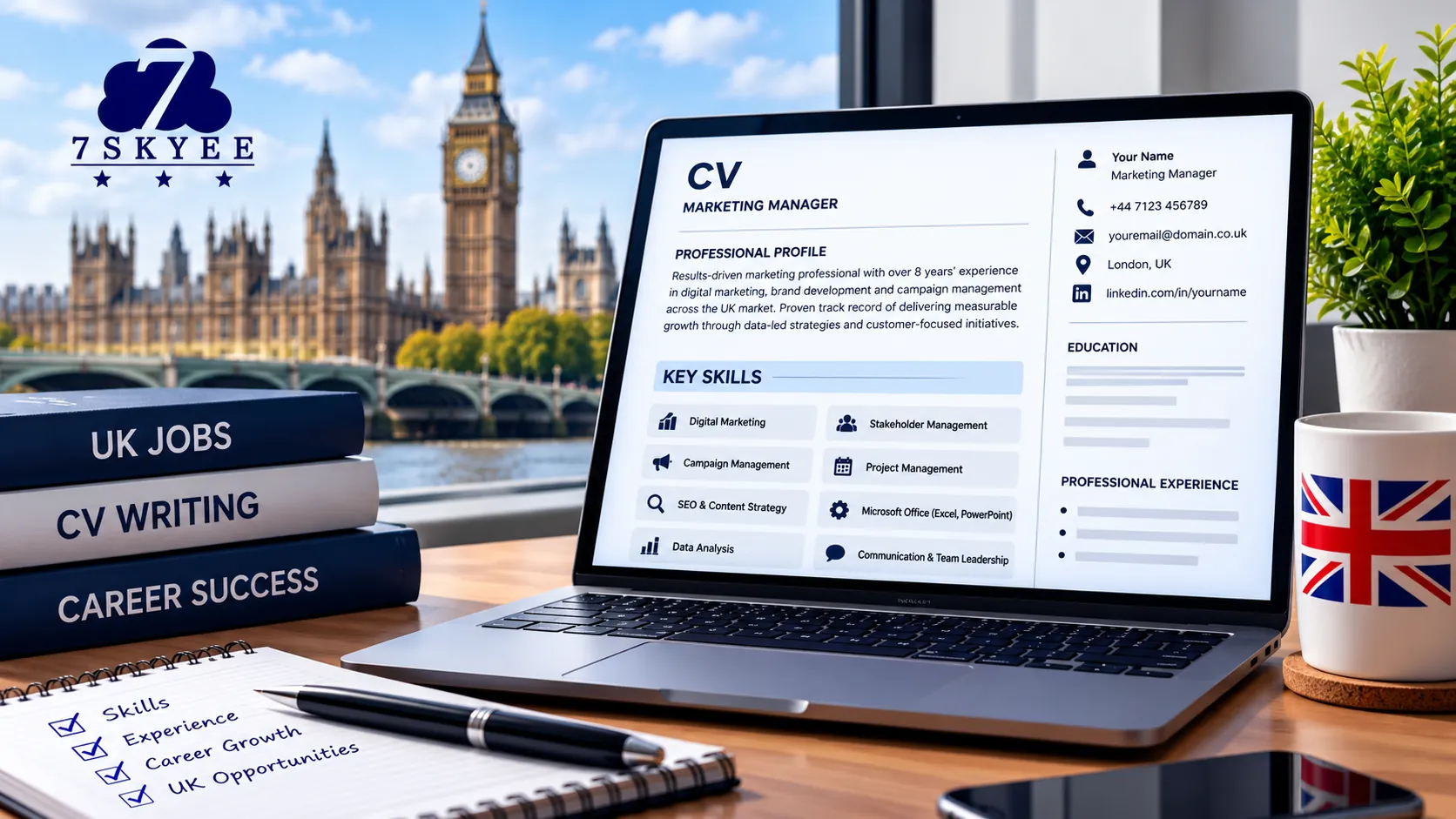
For experienced professionals: Place a concise key-skills section after your professional profile and before your employment history when the skills are important to the vacancy.
For technical professionals: Bring specialist tools, technologies or certifications into view early if they are essential requirements.
For graduates: A skills section can appear near your education or relevant projects, particularly when you have limited employment history.
For career changers: Highlight transferable and role-relevant skills early, then use your employment history to demonstrate how you developed them.
Your CV should remain easy to scan. For more guidance on structure, see how long a CV should be in the UK.
5. How to Match Your Skills to a Job Description
A targeted skills section begins with the vacancy, not a generic list copied from another CV.
Follow these steps:
Read the job description carefully.
Identify essential skills and repeated requirements.
Separate technical requirements from transferable abilities.
Identify which requirements you can demonstrate honestly.
Prioritise those skills in your CV.
Support the most important ones with examples in your employment history.
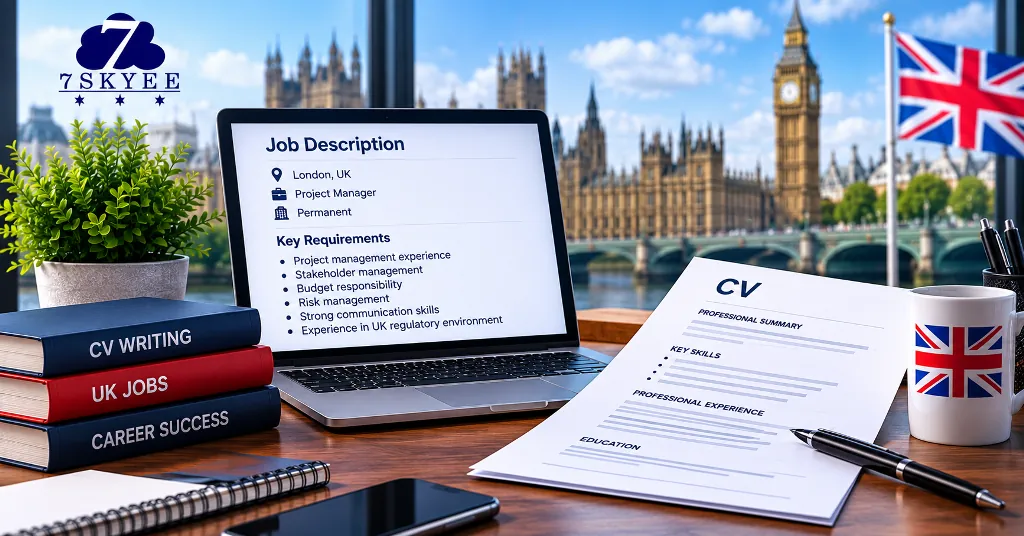
For example, if a Project Manager vacancy emphasises risk management, budget control and stakeholder communication, those skills should be easy to find in your CV if they reflect your experience.
You can learn more in our guide to tailoring your CV to a job description in the UK.
6. Skills Section Examples for Different UK Jobs
The examples below illustrate how to select skills for different types of roles. Adapt them to your actual abilities and the requirements of the vacancy.
Project Manager
Key Skills
Project planning and delivery
Stakeholder management
Risk and issue management
Budget monitoring
Resource allocation
Cross-functional team coordination
Project reporting
Process improvement
Human Resources Manager
Key Skills
Recruitment and talent acquisition
Employee relations
Performance management
Learning and development
HR policy implementation
Workforce planning
HR reporting
Stakeholder engagement
Finance Manager
Key Skills
Financial planning and analysis
Budgeting and forecasting
Management reporting
Financial controls
Variance analysis
Cash flow management
Financial modelling
Business partnering
Customer Service Professional
Key Skills
Customer relationship management
Complaint resolution
Written and verbal communication
CRM systems
Query handling
Service quality monitoring
Problem-solving
Team collaboration
Digital Marketing Professional
Key Skills
SEO and keyword research
Content marketing
Campaign management
Web analytics
Email marketing
Social media management
Conversion optimisation
Performance reporting
Do not use these lists unchanged if they do not reflect your own experience. Their purpose is to help you identify the skills relevant to a particular career path.
7. How to Demonstrate Skills Rather Than Just List Them
A skills section identifies your capabilities, but your employment history should provide evidence.
Consider the difference.
Generic statement:
Strong leadership and communication skills.
More convincing evidence:
Led a team of 18 employees across daily operations, introduced structured performance reviews and improved coordination between departments.
The second example gives the recruiter a clearer picture of how the candidate applied leadership and communication.
You do not need to provide a separate achievement for every skill. Instead, use relevant examples throughout your employment history to support the most important claims.
Where measurable results are available, include them accurately.
8. Should You Include Soft Skills?
Yes, when they are relevant to the role and supported by evidence.
Common examples include:
Communication
Teamwork
Adaptability
Problem-solving
Organisation
Decision-making
Conflict resolution
However, these terms can be vague when presented without context.
Instead of listing “problem-solving” alone, you might describe a work achievement where you identified an operational issue and implemented a practical solution.
For senior roles, demonstrate leadership, judgement and collaboration through examples rather than relying exclusively on descriptive labels.
9. How to Make Your Skills Section ATS-Friendly
Applicant tracking systems (ATS) help employers manage recruitment applications. The way they process CVs varies by system and employer, so no particular format or keyword can guarantee shortlisting.
To improve clarity and readability:
Use a conventional heading such as Key Skills or Technical Skills.
Include relevant terminology from the job description where it accurately describes your abilities.
Use standard skill names rather than unusual abbreviations.
Keep formatting simple and consistent.
Avoid placing essential skills inside graphics or complicated text boxes.
Ensure the same skills are reflected accurately in your experience where appropriate.
For further advice, read how to make your CV ATS-friendly for UK jobs.
10. Common Skills Section Mistakes
Avoid these common problems.
Listing too many skills: A long list can hide the abilities that matter most.
Using generic claims: Words such as “hard-working” and “motivated” do not explain your professional capabilities.
Including skills you cannot demonstrate: Be prepared to discuss any skill listed during an interview.
Repeating the same information: Your profile, skills section and employment history should complement one another rather than repeat identical statements.
Ignoring the job description: A skills section should reflect the position you are applying for.
Using skill ratings without evidence: Progress bars and star ratings can be subjective and may take up valuable space. Clear descriptions and examples are generally more useful.
Overlooking spelling and consistency: Errors can undermine an otherwise strong application.
For a broader review, read CV mistakes UK recruiters notice first.
11. How to Tailor Your Skills Section for Each Application
You do not need to rewrite your entire CV for every vacancy.
Instead, review your skills section and make sensible adjustments:
Move the most relevant skills towards the beginning.
Remove skills that add little value for the specific role.
Use accurate terminology from the vacancy.
Make specialist skills visible when they are essential.
Check that your employment history supports the skills you claim.
For example, a candidate applying for a commercial project role may prioritise budget control and stakeholder management. The same candidate applying for a delivery-focused role might emphasise project planning, risk management and implementation.
Your underlying experience remains the same; the emphasis changes to reflect the opportunity.
UK CV Skills Section Checklist
Before submitting your application, check the following:
My skills are relevant to the target role.
I have prioritised essential requirements from the job description.
My technical skills accurately reflect my proficiency.
I have included transferable skills where appropriate.
My skills section is concise and easy to scan.
I have avoided unsupported claims and generic filler.
My employment history provides evidence of important skills.
My terminology is clear and ATS-readable.
I have checked spelling, grammar and formatting.
I have reviewed the section for this specific vacancy.
Final Thoughts
A strong CV skills section does more than list what you can do. It helps recruiters identify your most relevant capabilities and understand how they relate to the position.
Focus on relevance rather than quantity. Choose skills that match the job description, describe them accurately and demonstrate important abilities through your professional achievements.
A clear, targeted skills section can strengthen your CV as part of a well-structured application, although it cannot guarantee an interview.
Need Professional CV Support for the UK?
Your skills section should work alongside your professional profile, employment history and achievements to present a consistent picture of your experience.
Explore 7Skyee's professional UK CV writing service for support with positioning your experience and tailoring your CV to your target roles.