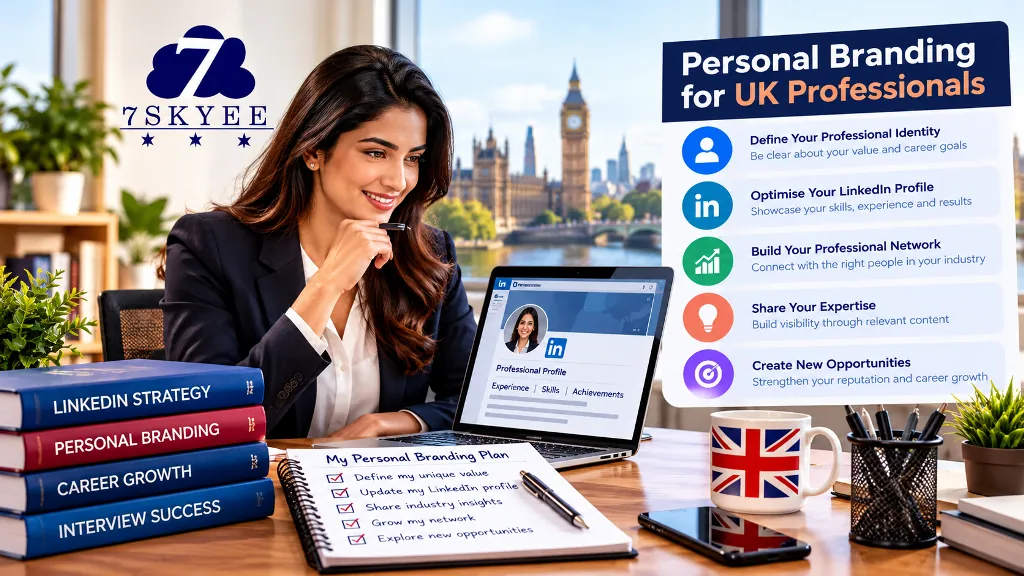
Your professional reputation often develops before you meet a recruiter, hiring manager or potential client. Someone may discover your LinkedIn profile, read an article you have shared, review your career history or hear about your work through a professional contact.
These interactions contribute to how people understand your experience, expertise and professional value.
This is where personal branding matters. It is not about becoming an influencer, posting every day or promoting yourself constantly. It is about communicating what you do well, what you stand for professionally and the value you can bring to an organisation.
For professionals in the UK, a consistent personal brand can support job searches, career progression, networking and professional credibility. It can also help align your CV, LinkedIn profile and interview answers so that they tell a coherent career story.
This guide explains how to build a practical personal brand that reflects your genuine experience and supports your long-term career goals.
1. What Is Personal Branding?
Personal branding is the way you communicate your professional identity, expertise, values and contribution to others.
It includes more than your LinkedIn profile or the content you publish online. Your CV, communication style, work achievements, professional relationships and reputation all influence how others perceive you.
A clear personal brand helps people understand:
What you specialise in.
Which professional problems you can help solve.
What experience and skills you bring.
What distinguishes your approach.
The type of work or opportunities that interest you.
For example, two professionals may both work in human resources. One may be known for employee relations and workplace policy, while the other specialises in talent acquisition and recruitment strategy. Their professional brands should reflect these different strengths.
Your goal is not to invent a marketable identity. It is to communicate your existing strengths and direction clearly.
2. Why Personal Branding Matters for Your Career
A strong personal brand can help you present your experience consistently across different professional settings.
It helps recruiters understand your value
Recruiters often review CVs, LinkedIn profiles and application details together. When these sources communicate a consistent professional story, it is easier to understand your expertise and career direction.
It supports career progression
If you want to move into leadership, a specialist position or a new industry, your professional presence can demonstrate the skills and interests relevant to that direction.
It strengthens professional networking
A clear description of your work makes it easier for colleagues, industry contacts and former managers to understand what opportunities might suit you.
It helps establish credibility
Sharing useful insights, contributing thoughtfully to professional discussions and demonstrating relevant achievements can help build a reputation over time.
It supports career changes
When moving into a new field, personal branding can help explain how your existing experience transfers to the roles you want to pursue.
These benefits are not guaranteed, and personal branding alone will not secure a job. It works best alongside relevant experience, strong applications, professional relationships and effective interview preparation.
3. Define Your Professional Identity Before Promoting It
Before changing your profile or publishing content, clarify what you want people to understand about your professional background.
Start with four questions:
What are my strongest professional skills?
Which problems or challenges do I help solve?
What achievements demonstrate my capabilities?
What roles, industries or opportunities do I want to pursue?
Your answers should be based on evidence rather than aspirations alone.
For example, a finance professional might focus on financial planning, reporting and business decision support. A technology professional might emphasise cloud infrastructure, cybersecurity or software delivery. An experienced operations manager might focus on process improvement, workforce leadership and service performance.
You do not need to present yourself as an expert in everything. A focused professional identity is usually easier to communicate than a long list of unrelated skills.
4. Create a Clear Professional Value Statement
A professional value statement is a concise explanation of your expertise, the value you offer and the context in which you work.
A simple structure is:
Professional focus + relevant strengths + value or outcome.
For example:
“Marketing professional specialising in digital campaigns, audience insights and content strategy, helping teams improve campaign relevance and make better-informed marketing decisions.”
Or:
“Operations manager with experience in process improvement, team coordination and service delivery, focused on improving operational consistency and customer outcomes.”
These are illustrative examples. Your statement should accurately reflect your own experience and avoid unsupported claims.
You can use a refined version of this statement in your LinkedIn headline, professional summary, networking introductions and CV profile. Adapt the wording to each context rather than copying the same paragraph everywhere.
5. Optimise Your LinkedIn Profile
LinkedIn is an important professional platform because recruiters, employers, colleagues and potential clients may use it to understand your experience.
Your profile should provide a clear and credible picture of your professional identity.
Headline
Avoid relying solely on your current job title. Where appropriate, include your specialism and the value you offer.
For example, instead of:
“Operations Manager at ABC Ltd”
You might use:
“Operations Manager | Process Improvement | Team Leadership | Service Delivery”
Use only skills and areas of expertise that genuinely reflect your experience.
About section
Your About section should explain your background, strengths, relevant achievements and professional interests in a natural voice.
Avoid filling it with generic claims such as “passionate professional” or “results-driven leader” without evidence.
Experience section
Describe your responsibilities and, where possible, the results of your work. Prioritise the achievements most relevant to your target opportunities.
Skills
Include relevant skills that reflect your actual capabilities. Prioritise the ones most closely connected to the roles or professional opportunities you want.
Recommendations and evidence
Recommendations from colleagues or managers can provide additional context about your work. Seek them from people who can genuinely speak to your contribution.
Keep your profile accurate and up to date. Personal branding should make your professional experience easier to understand, not exaggerate it.
6. Align Your CV and LinkedIn Profile
Your CV and LinkedIn profile do not need to be identical, but they should tell a consistent story.
For example, if your CV emphasises project management and stakeholder coordination, your LinkedIn profile should not present an unrelated professional identity unless you can explain the connection.
Review the following details across both:
Job titles and employment dates.
Professional specialisms.
Key achievements.
Qualifications and certifications.
Career direction and target roles.
Your CV can be more tailored to a particular vacancy, while LinkedIn can provide a broader overview of your professional background.
For help presenting your experience clearly, read our guide to executive CV writing in the UK or explore our UK CV Writing service.
7. Share Expertise Without Posting Constantly
Building a personal brand does not require daily posts or constant online activity. The quality and relevance of your contributions matter more than posting for its own sake.
You could share:
A useful lesson from a completed project, without disclosing confidential information.
An insight about a development in your industry.
A practical explanation of a problem you understand well.
A thoughtful response to a professional discussion.
A reflection on a skill you have developed.
A useful resource relevant to your field.
For example, an HR professional might discuss how structured interviews can improve consistency in recruitment. An accountant might explain a common financial reporting challenge. A project manager might share lessons about managing changing priorities.
Make sure your contributions are accurate, respectful and appropriate for your professional responsibilities. Avoid sharing confidential employer information or presenting speculation as fact.
If public posting does not suit you, you can still develop your professional reputation through high-quality work, useful conversations and meaningful relationships.
8. Build a Professional Network That Reflects Your Goals
Networking is more effective when it is based on genuine professional relationships rather than collecting contacts.
Start by identifying people who are relevant to your interests:
Former colleagues and managers.
Professionals in your target industry.
People working in roles you would like to pursue.
Relevant professional associations and communities.
Recruiters specialising in your field.
When connecting with someone new, explain briefly why you are interested in connecting. If you ask for advice, make your request specific and respect their time.
You do not need to ask every contact for a job. Building relationships through useful conversations and professional exchanges can be valuable in its own right.
For professionals considering a career change, networking can also help you understand which skills employers value and where your experience may transfer.
9. Use Evidence to Support Your Professional Claims
Personal branding becomes more credible when it is supported by examples.
Instead of describing yourself as an excellent problem-solver, explain a problem you helped resolve. Instead of claiming to be a strong leader, describe a team, initiative or change programme you helped lead.
Useful evidence may include:
Projects delivered.
Processes improved.
Customers or stakeholders supported.
Teams coordinated or developed.
Relevant qualifications.
Professional contributions.
Measurable results, where figures are accurate and appropriate to share.
You do not need a numerical achievement for every skill. A clear explanation of what you did and why it mattered can still provide useful evidence.
Never invent metrics, endorsements or qualifications to strengthen your profile.
10. Develop Your Personal Brand When Changing Careers
A career change often requires you to communicate your experience differently.
Your existing job title may not immediately tell employers why you are suitable for a new field. A clear personal brand can help explain the connection between your previous work and your intended direction.
For example, someone moving from customer service into project coordination might highlight organisation, stakeholder communication, issue resolution and managing competing priorities.
To make this transition more credible:
Identify transferable skills from your existing experience.
Research the requirements of your target roles.
Develop relevant knowledge or qualifications where needed.
Update your CV and LinkedIn profile to reflect your intended direction.
Use genuine examples to demonstrate your readiness.
Do not claim extensive experience in a new field simply because you have completed a short course. Present your existing capabilities and developing knowledge accurately.
11. Common Personal Branding Mistakes
Trying to appeal to everyone: A professional identity that covers too many unrelated areas can become difficult to understand. Focus on the expertise most relevant to your goals.
Using generic language: Claims such as “innovative leader” or “strategic thinker” need evidence to be meaningful.
Exaggerating achievements: Credibility depends on accurate descriptions of your contribution and results.
Treating personal branding as self-promotion alone: Useful work, professional conduct and strong relationships also shape your reputation.
Copying someone else's style: Learn from others, but use language and examples that reflect your own experience.
Posting without a clear purpose: Share content when it adds value to your professional audience, not simply to maintain a posting streak.
Ignoring your existing online presence: Review publicly visible professional information and correct anything outdated or inconsistent.
Forgetting offline behaviour: Your reputation is also shaped by reliability, communication, collaboration and how you treat people.
12. A Practical 30-Day Personal Branding Plan
You do not need to overhaul everything at once. A simple plan can help you make steady progress.
Period
Action
Intended outcome
Week 1
Define your strengths, target opportunities and professional value statement
A clearer professional identity
Week 2
Review your LinkedIn headline, About section and experience
A more consistent profile
Week 3
Reconnect with relevant contacts and contribute to professional discussions
Stronger professional relationships
Week 4
Review your CV, profile and professional activity for consistency
A more coherent professional presence
At the end of the month, assess whether your profile communicates your expertise clearly and whether your activities support your goals. You do not need to measure success solely through likes, followers or connection counts.
13. Personal Branding Checklist
Before considering your professional brand established, check that:
I can explain my professional strengths clearly.
My value statement reflects genuine experience.
My LinkedIn profile is accurate and current.
My CV and LinkedIn profile communicate a consistent career story.
My achievements are supported by evidence.
My professional activity is relevant to my goals.
I am building genuine professional relationships.
I protect confidential information.
I avoid exaggerating skills, qualifications or results.
My professional presence supports the direction I want to pursue.
Final Thoughts
Personal branding is not about creating a polished image that differs from who you are. It is about making your genuine professional strengths, experience and direction easier for others to understand.
Start with a clear identity, support it with evidence, maintain a consistent CV and LinkedIn presence, and build relationships through useful professional contributions. Over time, these habits can strengthen how you communicate your value and support your career development.
If you would like help clarifying your career direction and presenting your professional strengths, explore 7Skyee's UK Career Coaching service