Make a Powerful First Impression That Sets the Tone for Your Entire Interview
Every interview begins with a first impression, and in many cases, that impression is created within the first two minutes. One simple question often determines whether the interviewer sees you as confident, professional, and well-prepared—or as someone who needs more guidance.
That question is:
"Tell me about yourself."
Although it sounds like the easiest question in an interview, it is one of the most misunderstood. Many candidates either narrate their entire life story, repeat their resume word for word, or become so nervous that they miss the opportunity to make a strong first impression.
The truth is, recruiters are not looking for your autobiography. They want a concise, engaging introduction that explains who you are professionally, what you have achieved, and why you're the right fit for the role.
Whether you're a fresher attending your first interview, an experienced professional looking for career growth, or a senior executive preparing for a leadership opportunity, mastering this question can significantly improve your interview performance.
In this comprehensive guide, you'll learn:
Why recruiters ask "Tell Me About Yourself"
What interviewers are really evaluating
A proven framework to structure your answer
Ready-to-use examples for different experience levels
Common mistakes that cost candidates job offers
Expert tips to leave a lasting first impression
By the end of this guide, you'll know how to introduce yourself naturally, confidently, and professionally—without sounding rehearsed.
Why Do Interviewers Ask "Tell Me About Yourself"?
Most candidates assume interviewers ask this question simply to start a conversation. While it certainly helps break the ice, there is a much deeper purpose behind it.
Recruiters use this question as an assessment tool. Within the first minute or two, they begin evaluating whether your communication style, confidence, experience, and career direction align with the position they are hiring for.
Think of it as your professional trailer. Just as a movie trailer highlights the most exciting moments without revealing the entire story, your introduction should summarise the most relevant aspects of your career and encourage the interviewer to learn more.
Recruiters are evaluating several things simultaneously:
Can you communicate clearly and confidently?
Do you understand your own career journey?
Are your experiences relevant to this role?
Can you organise your thoughts logically?
Do you sound genuinely interested in the opportunity?
Will you represent the company professionally if hired?
Many hiring managers admit that their initial impression forms within the first few minutes of the interview. While they continue evaluating candidates objectively, a strong opening often creates positive momentum throughout the conversation.
What Recruiters Are Really Looking For
Let's look beyond the question itself.
When an interviewer says, "Tell me about yourself," they are actually asking several hidden questions at once.
1. Can You Communicate Professionally?
Almost every role requires communication. Whether you're a software engineer explaining technical issues, an accountant discussing financial reports, or a sales executive presenting solutions to clients, your ability to express yourself matters.
Your answer should be:
Clear
Structured
Concise
Professional
Easy to follow
Candidates who jump randomly between topics or speak without direction often create the impression that they may communicate similarly in the workplace.
2. Do You Understand Your Own Career Story?
Many professionals have excellent experience but struggle to explain it.
Recruiters want candidates who understand:
where they started,
what they learned,
how they progressed,
and where they want to go next.
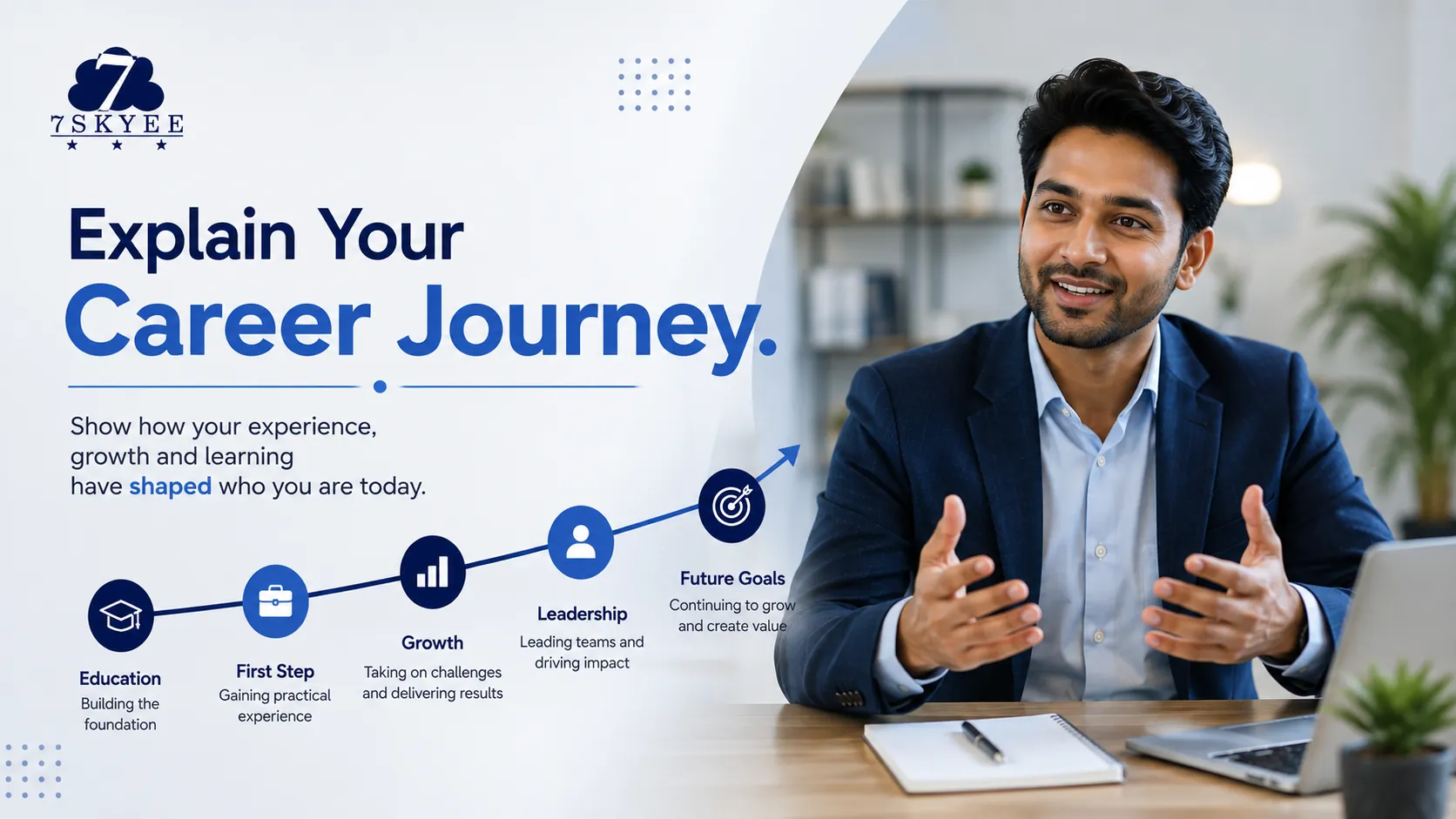
If you cannot explain your own career journey confidently, employers may question whether you've reflected on your professional growth.
Your introduction should show that your career decisions have purpose rather than appearing accidental.
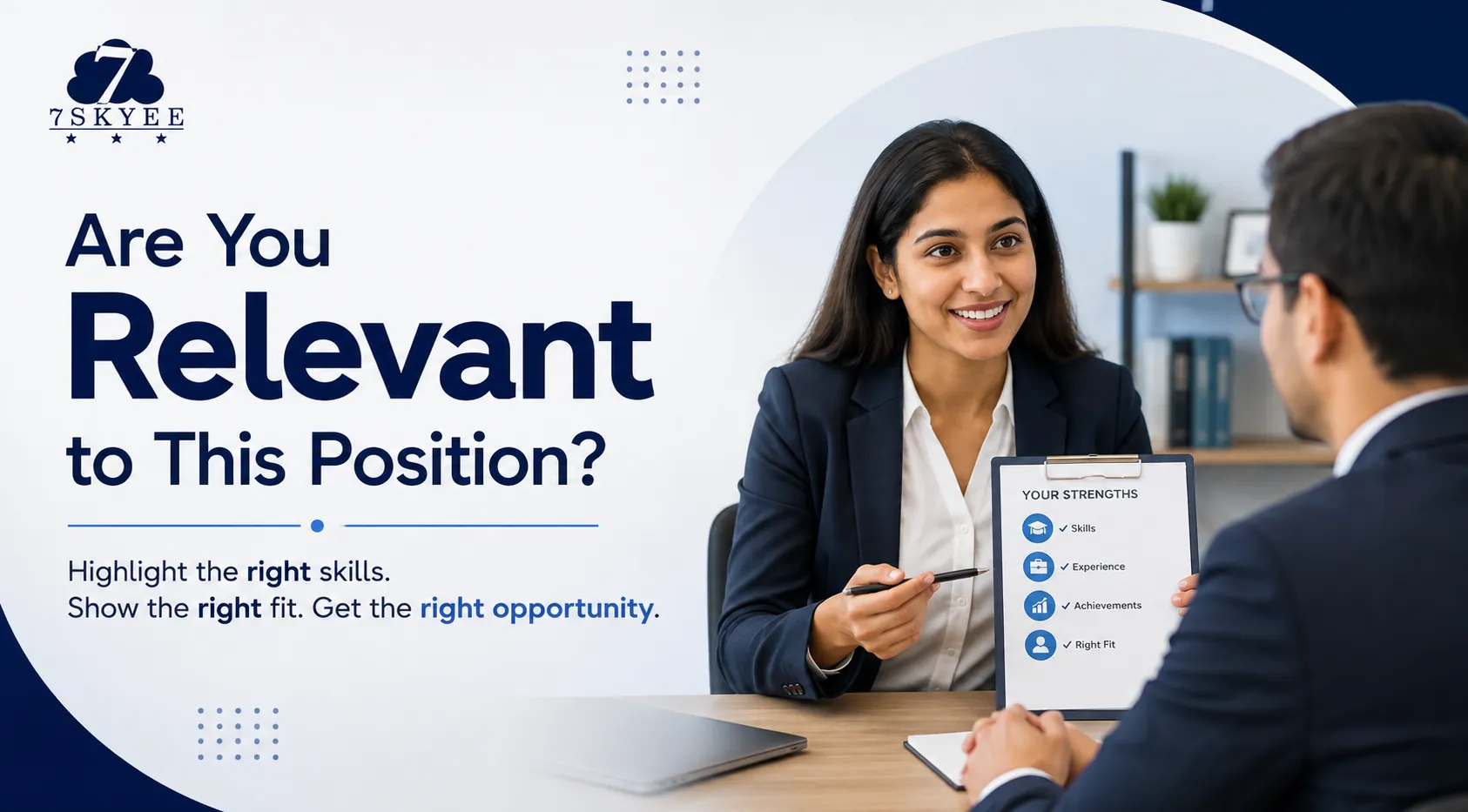
3. Are You Relevant to This Position?
Interviewers already have your resume.
They don't want you to read it back to them.
Instead, they want you to connect your experience to the role you're applying for.
For example, if you're applying for a Production Manager position, highlighting your college achievements before discussing ten years of manufacturing leadership doesn't add much value.
Instead, focus on the experiences that demonstrate why you're a strong fit for the specific position.
4. Can You Prioritise Information?
Another important skill recruiters observe is your ability to separate important information from unnecessary details.
Consider these two introductions.
Candidate A
"I was born in Jaipur. My father owns a business. I studied in three different schools. During college I participated in sports. I enjoy travelling and photography..."
Candidate B
"I'm currently working as a Quality Engineer with five years of experience in automotive manufacturing. During this time I've specialised in process improvement and quality audits while successfully leading multiple cost-reduction initiatives. I'm now looking for an opportunity where I can contribute to a larger manufacturing organisation while expanding my leadership responsibilities."
Which introduction immediately sounds more professional?
The difference isn't experience.
It's relevance.
5. Can You Build Rapport?
Interviews aren't interrogations.
They're conversations.
Recruiters prefer candidates who sound natural rather than rehearsed.
Your goal is to build confidence without sounding arrogant.
Imagine you're introducing yourself to a respected business leader at a networking event.
Professional.
Friendly.
Authentic.
That's exactly how your interview introduction should feel.
The Biggest Mistake Most Candidates Make
One of the biggest misconceptions is believing that the interviewer wants to hear your complete biography.
As a result, candidates often begin with:
"My name is Rahul. I was born in..."
or
"I completed Class 10 from..."
or
"My father is a businessman..."
Unless you're attending a personality interview for a very specific purpose, none of this helps the recruiter decide whether you're suitable for the role.
Remember this principle:
Interviewers hire professionals—not biographies.
Every sentence should answer one question:
"Does this information increase my chances of getting selected?"
If the answer is no, leave it out.
The 4-Step Formula That Works in Almost Every Interview
After interviewing thousands of candidates over the years, recruiters often notice that the strongest introductions follow a similar structure.
Instead of memorising paragraphs, remember this simple framework:
Present → Past → Achievements → Future
Let's understand each part.
Step 1: Start with the Present
Always begin with where you are today.
Tell the interviewer:
your current designation,
years of experience,
industry,
and primary expertise.
Example
"I'm currently working as a Senior HR Executive with over six years of experience in talent acquisition and employee engagement within the manufacturing sector."
Immediately, the interviewer understands:
Current position
Experience level
Industry
Area of expertise
All within one sentence.
Step 2: Explain Your Career Journey
Now explain how you reached your current position.
Don't list every company.
Instead, summarise your progression.
Example
"I started my career as a Recruitment Coordinator and gradually moved into end-to-end hiring, employer branding and strategic recruitment planning while working with fast-growing manufacturing organisations."
Notice how this explains progression instead of chronology.
Recruiters appreciate growth.
Step 3: Highlight Your Key Achievements
This is where many candidates lose an opportunity.
Don't simply describe responsibilities.
Talk about results.
For example:
Instead of saying:
"I handled recruitment."
Say:
"Over the past three years, I've successfully hired more than 250 professionals across engineering, production and support functions while reducing average hiring time by nearly 20%."
Numbers immediately increase credibility.
Achievements may include:
Revenue growth
Cost savings
Team leadership
Process improvements
Projects completed
Awards
Certifications
Productivity improvements
Client satisfaction
Hiring targets achieved
Even freshers can discuss:
Academic projects
Internships
Leadership roles
Certifications
Competitions
Volunteer work
Step 4: Explain Why You're Here
Finally, connect your experience with the opportunity.
Interviewers don't want generic statements like:
"I'm looking for better growth."
Instead, explain why this particular role interests you.
Example:
"I'm excited about this opportunity because it allows me to work in a larger organisation where I can contribute my recruitment experience while continuing to develop strategic HR capabilities."
This demonstrates intentional career planning rather than simply searching for a higher salary.
Why This Framework Works
This structure mirrors how recruiters naturally process information.
Instead of making them work to understand your story, you present it in a logical sequence:
Who are you today?
How did you get here?
What have you achieved?
Why do you want this role?
It feels organised, confident and professional without sounding scripted.
By the time you finish this introduction, the interviewer already has a clear understanding of your background and is ready to explore your experience in greater detail.
10 Common Mistakes Candidates Make While Answering "Tell Me About Yourself"
Even highly qualified professionals sometimes lose opportunities because they make avoidable mistakes during their introduction. Recruiters often form their first impression within the first couple of minutes, and these errors can immediately weaken an otherwise strong profile.
Let's look at the most common mistakes and how to avoid them.
1. Narrating Your Entire Life Story
One of the biggest mistakes candidates make is treating this question as an invitation to tell their complete life journey.
Many begin with:
"I was born in Jaipur, completed my schooling there, then moved to Delhi..."
While this may be factually correct, it doesn't help the interviewer determine whether you're suitable for the position.
Instead, focus on your professional identity.
Your introduction should answer:
Who are you professionally?
What experience do you have?
Why are you a good fit?
Keep personal history to an absolute minimum unless specifically relevant.
2. Reading Your Resume Word for Word
Remember one important fact:
The interviewer has already read your resume.
Repeating every company, date, and responsibility wastes valuable interview time.
Instead of reading your resume, summarise the highlights.
Think of your answer as the executive summary of your career.
3. Speaking for Too Long
Many candidates continue speaking for four or five minutes without stopping.
This creates two problems:
The interviewer loses interest.
You leave less time for meaningful discussion.
A well-structured introduction should usually take 60 to 90 seconds.
Long enough to build credibility.
Short enough to maintain attention.
4. Giving Generic Answers
Statements like:
"I'm hardworking."
"I'm a quick learner."
"I'm passionate."
are extremely common.
Instead of making claims, support them with examples.
For instance:
Instead of saying:
"I'm a good leader."
Say:
"I led a cross-functional team of eight members during a warehouse automation project that reduced processing time by 18%."
Specific achievements are always more convincing than generic adjectives.
5. Speaking Negatively About Previous Employers
Never begin your introduction by complaining.
Avoid statements such as:
"My current company doesn't appreciate employees."
"My manager is difficult."
"The salary is very poor."
Recruiters immediately wonder whether you'll speak similarly about their organisation in the future.
Stay positive and future-focused.
6. Sounding Over-Rehearsed
Practising is good.
Memorising every word is not.
Recruiters can usually tell when a candidate is reciting a script.
Aim for natural conversation rather than perfect wording.
7. Not Tailoring Your Answer
A common mistake is using the same introduction for every interview.
Your answer should always reflect:
the role,
the industry,
and the company.
If you're interviewing for Operations, highlight operational achievements.
If you're interviewing for HR, emphasise recruitment, employee engagement, compliance, or HR strategy.
8. Ignoring Achievements
Many professionals spend the entire introduction discussing responsibilities.
Recruiters want results.
Whenever possible, include measurable achievements.
Examples:
Increased sales by 30%
Reduced recruitment turnaround by 25%
Managed a ₹15 crore portfolio
Led a team of 40 employees
Numbers make your answer more credible.
9. Showing Low Confidence
Your words matter.
Your confidence matters even more.
Poor body language can weaken an excellent answer.
Avoid:
Looking down constantly
Speaking too softly
Folding your arms
Fidgeting
Avoiding eye contact
Instead:
Sit comfortably.
Smile naturally.
Maintain appropriate eye contact.
Speak clearly.
10. Forgetting Why You're Applying
Many candidates finish their introduction without explaining why they're interested in the opportunity.
Always end with a forward-looking statement.
Example:
"I'm excited about this opportunity because it aligns well with my experience in manufacturing operations while allowing me to take on broader leadership responsibilities."
This gives your introduction a strong and purposeful ending.
Interview Answer Examples
The following examples can be customised according to your own experience.
Example 1 – Fresher
"I recently completed my B.Tech in Mechanical Engineering from XYZ University. During my final year, I completed internships in production and quality control, where I gained practical exposure to manufacturing processes and problem-solving techniques. I also led a college technical project that strengthened my teamwork and leadership skills. I'm looking for an opportunity where I can apply my technical knowledge, continue learning from experienced professionals, and contribute to a growing organisation."
Example 2 – HR Professional
"I'm currently working as an HR Executive with over five years of experience in talent acquisition and employee engagement. During my career, I've managed end-to-end recruitment across manufacturing and engineering industries, successfully closing positions from entry-level to managerial roles. I enjoy connecting talented professionals with the right opportunities and continuously improving recruitment processes. I'm now looking for a role where I can contribute more strategically while expanding my HR expertise."
Example 3 – Sales Professional
"I'm currently working as a Senior Sales Executive with seven years of experience in B2B sales across industrial products. Throughout my career, I've consistently exceeded sales targets, built long-term client relationships, and expanded business across multiple territories. One of my proudest achievements was increasing regional sales by over 35% within two years. I'm excited about this opportunity because it allows me to leverage my consultative selling experience in a larger and more competitive market."
Example 4 – Software Engineer
"I'm a Software Engineer with four years of experience developing scalable web applications using Java, Spring Boot and React. I've worked on designing APIs, improving application performance and collaborating with cross-functional teams in Agile environments. My recent project reduced application response time by nearly 40%, significantly improving user experience. I'm looking for an opportunity where I can work on larger technical challenges while continuing to grow as a software professional."
Example 5 – Accountant
"I'm an Accountant with over six years of experience in financial reporting, GST compliance, taxation and statutory audits. I've worked closely with senior management to improve financial accuracy and streamline reporting processes. During my current role, I implemented improvements that reduced monthly closing time by three working days. I'm now looking for an organisation where I can contribute my financial expertise while taking on greater responsibilities."
Example 6 – Marketing Professional
"I'm currently working as a Digital Marketing Executive with five years of experience managing SEO, Google Ads and social media campaigns. I've successfully improved website traffic, generated qualified leads and managed campaigns across multiple industries. One of my recent SEO projects increased organic traffic by more than 70% within eight months. I'm excited about this opportunity because it combines strategic marketing with business growth."
Example 7 – Operations Manager
"I'm an Operations Manager with over twelve years of experience in manufacturing and supply chain operations. Throughout my career, I've focused on improving productivity, reducing operational costs and building high-performing teams. Recently, I led a lean manufacturing initiative that reduced production waste by 18% while improving delivery timelines. I'm now seeking a leadership opportunity where I can drive operational excellence on a larger scale."
Example 8 – Senior Executive
"I'm a business leader with more than eighteen years of experience across operations, business development and organisational strategy. During my career, I've led large cross-functional teams, expanded business operations into new markets and implemented transformation initiatives that significantly improved operational efficiency and profitability. I'm passionate about building strong teams and driving sustainable business growth. This opportunity aligns perfectly with my leadership experience and long-term career objectives."
Example 9 – Career Break Candidate
"I have over eight years of experience in finance and accounting. After taking a planned career break to manage personal responsibilities and upskill through professional certifications, I'm now fully prepared to return to the corporate environment. During my break, I continued learning about the latest accounting standards and financial technologies to ensure my skills remain relevant. I'm excited to contribute my experience while continuing my professional growth."
Example 10 – Career Change Candidate
"I began my career in customer service, where I developed strong communication and problem-solving skills while working closely with clients. Over time, I became increasingly interested in digital marketing and completed professional certifications in SEO, content marketing and Google Ads. I've also worked on freelance projects to gain practical experience. I'm now looking for an opportunity where I can combine my customer-centric mindset with my newly developed marketing skills."
Key Takeaways
Regardless of your profession or experience level, a strong introduction should always answer four questions:
Who are you today?
What relevant experience do you have?
What achievements demonstrate your value?
Why are you interested in this opportunity?
Keep your answer concise, relevant and authentic. Don't try to impress with unnecessary details—focus on making it easy for the interviewer to understand why you're a strong candidate.
Tailoring Your Answer for Different Industries
One of the biggest reasons candidates fail to make a strong first impression is that they use the same introduction for every interview. A great answer should always be customised for the role, industry, and organisation.
Here are examples of what recruiters in different industries typically want to hear.
Manufacturing & Engineering
Recruiters look for:
Technical expertise
Process improvement
Safety awareness
Teamwork
Productivity improvements
Lean manufacturing
Quality standards
Mention achievements like:
Reduced downtime
Improved production efficiency
Cost reduction
Quality improvements
Project completion
Information Technology
Recruiters focus on:
Technical stack
Problem-solving
Software development lifecycle
Agile methodology
Team collaboration
Continuous learning
Mention:
Programming languages
Frameworks
Certifications
Successful projects
Performance improvements
Sales & Business Development
Recruiters want evidence of:
Revenue generation
Client relationship management
Business expansion
Negotiation skills
Target achievement
Include measurable numbers such as:
Sales growth
Territory expansion
Customer acquisition
Retention rates
Human Resources
Focus on:
Recruitment
Employee engagement
HR operations
Compliance
Performance management
Employer branding
Mention hiring numbers, retention improvements or successful HR initiatives.
Finance & Accounting
Recruiters appreciate:
Financial accuracy
Compliance
Audits
Taxation
Budget management
Cost optimisation
Discuss process improvements and financial controls rather than only daily responsibilities.
Body Language Matters More Than You Think
Many candidates prepare excellent answers but overlook non-verbal communication.
Studies consistently show that communication is influenced by more than just words. While the exact percentages vary by context, your confidence, tone and body language strongly influence how your message is received.
Maintain Natural Eye Contact
Avoid:
Looking down continuously
Looking at the ceiling
Constantly looking away
Instead:
Maintain comfortable eye contact while speaking naturally.
Smile Naturally
A genuine smile helps create rapport.
Avoid forcing a smile throughout the interview.
Be warm.
Be approachable.
Be professional.
Sit Comfortably
Good posture reflects confidence.
Avoid:
Leaning too far back
Slouching
Folding arms
Excessive movements
Control Your Pace
Many candidates speak too quickly because of nervousness.
Instead:
Slow down.
Pause briefly between ideas.
Allow the interviewer to absorb your answer.
A calm pace demonstrates confidence.
Speak Clearly
Avoid using filler words repeatedly.
Examples:
Umm...
Actually...
Basically...
Like...
Replacing these with short pauses sounds much more professional.
How Recruiters Secretly Score Your Answer
Although every interviewer has a different style, most experienced recruiters mentally evaluate candidates on similar parameters.
Evaluation AreaWhat Recruiters Look ForCommunicationClear, structured and professionalConfidenceCalm, positive and genuineRelevanceExperience aligned with the roleCareer DirectionClear progression and future goalsAchievementsSpecific and measurable contributionsProfessionalismPositive attitude and maturityCultural FitAlignment with company valuesMotivationGenuine interest in the opportunity
A candidate who scores consistently across these areas usually creates a stronger overall impression.
Quick Practice Exercise
Before your next interview, answer these questions in writing.
Question 1
Can you explain who you are professionally in two sentences?
Question 2
What are your three biggest career achievements?
Question 3
Why are you interested in this role?
Question 4
How does your previous experience help this employer?
Question 5
Can you explain your introduction confidently within 90 seconds?
If not, continue refining your answer until it feels natural.
Interview Preparation Checklist
Before attending your interview, confirm that you can answer:
✅ Tell me about yourself
✅ Why do you want this job?
✅ Why should we hire you?
✅ What are your strengths?
✅ What is your biggest achievement?
✅ Why are you leaving your current job?
✅ What are your salary expectations?
✅ Where do you see yourself in five years?
Being prepared for these common questions will significantly improve your confidence.
Frequently Asked Questions
1. How long should my answer be?
Aim for 60–90 seconds. Long enough to highlight your experience, but short enough to keep the interviewer engaged.
2. Should I include personal information?
Only if it's directly relevant. Focus primarily on your professional background, skills and achievements.
3. Can I memorise my answer?
It's better to memorise the structure rather than every word. A natural conversation always sounds more authentic than a scripted response.
4. Should freshers mention college projects?
Yes. If you don't have work experience, internships, projects, certifications, leadership roles and academic achievements become valuable talking points.
5. Should experienced professionals discuss every previous company?
No. Summarise your career journey and focus on the experiences most relevant to the role.
6. Is it acceptable to mention salary expectations?
Not during your introduction unless the interviewer specifically asks.
7. How should I explain a career break?
Be honest, positive and brief. Explain what you learned or how you stayed professionally active during that period.
8. Should I mention hobbies?
Only if they're relevant or help demonstrate useful qualities such as leadership, discipline or teamwork.
9. What if I'm changing industries?
Highlight transferable skills and explain why you're making the transition. Focus on what you can contribute rather than what you lack.
10. Can I use humour?
A light, natural moment is fine, but avoid jokes or sarcasm in your introduction.
11. What if I'm nervous?
Practice your introduction several times, record yourself, and rehearse with a friend or mentor. Preparation builds confidence.
12. Is this question asked in every interview?
Not always in exactly the same words, but almost every interview begins with some form of self-introduction.
13. Can I mention achievements with numbers?
Absolutely. Quantifiable achievements make your introduction more credible and memorable.
14. Should I tailor my answer for every company?
Yes. A customised introduction demonstrates preparation and genuine interest.
15. What's the biggest mistake candidates make?
Talking too much about their personal life or simply reading their resume instead of presenting a clear professional story.
Final Thoughts
Your answer to "Tell Me About Yourself" is more than an introduction—it's your opportunity to shape the interviewer's first impression.
A well-structured response demonstrates professionalism, confidence and clarity. It helps recruiters quickly understand who you are, what you've achieved and why you're the right candidate for the role.
Remember these four key elements:
Start with your current role.
Summarise your career journey.
Highlight your achievements.
Explain why you're excited about the opportunity.
Most importantly, don't memorise a speech. Learn your story, practise your delivery and adapt it to each interview. Authenticity, combined with preparation, is what leaves a lasting impression.
Need Professional Interview Coaching?
Even experienced professionals sometimes struggle to present themselves confidently in interviews. At 7Skyee, our interview coaches help candidates prepare with personalised guidance based on their industry, experience and career goals.
Our Interview Coaching service includes:
One-to-one mock interviews
HR and technical interview preparation
STAR method coaching
Salary negotiation guidance
Confidence and communication improvement
Personalised feedback from recruitment professionals
Whether you're a fresher attending your first interview or a senior executive preparing for a leadership role, we'll help you perform with confidence.