
Changing careers can be exciting, but presenting your experience to a new industry or function can be challenging. You may have years of professional experience, valuable skills and a strong record of achievement, yet your existing resume may not clearly explain why you are suitable for a different role.
The solution is not to hide your previous career or pretend you already have experience you do not possess. It is to identify the skills, achievements and knowledge that transfer to your target role and explain their relevance.
A well-positioned career change resume helps employers understand what you bring from your previous experience, what you have developed for your new direction and why the transition makes sense.
This guide explains how to prepare a career change resume for the Indian job market, with practical examples and a step-by-step approach.
Why a Career Change Requires a Different Resume Strategy
A traditional resume often follows a straightforward story: your education, work experience, achievements and progression within a particular field.
When you change careers, that story may no longer be enough.
For example, a sales professional moving into business analysis may have experience in customer research, reporting, stakeholder communication and problem-solving. However, a resume focused entirely on sales targets and client acquisition may fail to show how those capabilities relate to business analysis.
Similarly, a teacher moving into corporate learning and development may have experience in training delivery, learning design, communication and performance assessment. These capabilities may be relevant to the new role, but employers need to see the connection.
Your career change resume must answer three questions:
What relevant capabilities have you already developed?
How do those capabilities relate to the new role?
What evidence shows that you are preparing for this transition?
The objective is to make your career move credible, relevant and easy to understand.
Step 1: Define the Role You Want to Move Into
Before rewriting your resume, identify your target role as clearly as possible.
“Looking for a career change” is too broad to guide a strong resume.
Instead, specify the job titles, functions or industries you want to target.
For example:
Sales executive to business development manager.
Customer service professional to customer success specialist.
Accountant to financial analyst.
Teacher to corporate trainer.
Operations executive to project coordinator.
Mechanical engineer to technical sales specialist.
These are different transitions, and each requires a different approach to resume positioning.
Study relevant job descriptions
Review several job descriptions for the types of roles you want. Identify the skills, responsibilities, qualifications and experience that appear repeatedly.
Then divide the requirements into three groups:
Skills you already have: Capabilities supported by your previous work, such as stakeholder management, analysis, planning or communication.
Skills you need to strengthen: Areas where additional training, projects or practical exposure could improve your suitability.
Requirements you do not currently meet: Mandatory qualifications, technical experience or professional credentials you may need to address before applying.
This exercise helps you avoid building a resume around an unrealistic target or adding keywords without evidence.
Step 2: Identify Your Transferable Skills
Transferable skills are capabilities that can be applied across different roles, industries or working environments.
They are particularly important when your previous job title does not resemble the job title you are targeting.
Depending on your experience, transferable skills may include:
Project coordination and planning.
Data analysis and reporting.
Stakeholder communication.
Customer relationship management.
Team leadership and people management.
Process improvement.
Budget management.
Training and coaching.
Research and problem-solving.
Negotiation and presentation.
However, simply listing these skills is not enough. You need to demonstrate where you used them and what you achieved.
Example: Sales to Business Analysis
A sales professional may have experience analysing customer trends, reviewing performance reports, identifying reasons for lost business and recommending changes to improve results.
These activities may support a transition into a business analysis role, particularly where the target position values commercial understanding and analytical thinking.
Instead of presenting the experience only as sales activity, explain the analysis, decisions and outcomes involved.
For example:
Before: Managed sales accounts and achieved monthly targets.
After: Analysed customer purchasing patterns and sales performance reports to identify growth opportunities, prioritise accounts and support commercial decision-making.
The revised statement highlights transferable capabilities without claiming that the person has already worked as a business analyst.
Step 3: Choose the Right Resume Format
For many career changers, a reverse-chronological resume with a strong opening summary and a focused skills section is a sensible starting point.
It preserves a clear employment history while allowing you to highlight relevant capabilities before the recruiter reaches your previous job titles.
A practical structure is:
Name and contact information.
Target-role headline.
Professional summary.
Relevant skills and expertise.
Selected achievements or relevant projects.
Professional experience.
Education and certifications.
Relevant additional training, where applicable.
A purely functional resume that groups everything under skills and hides employment dates may make it harder for recruiters to understand your professional history.
If you use a hybrid format, keep your work history accurate and easy to follow.
The best structure depends on your experience, target role and industry. There is no single format that works equally well for every career transition.
Step 4: Write a Professional Summary for Your New Direction
Your professional summary should connect your previous experience to your intended career move.
Avoid statements such as:
“I am looking for a challenging opportunity in a new field where I can utilise my skills.”
This does not explain what you offer or why your background is relevant.
Instead, communicate your existing strengths, relevant achievements and developing expertise in the target area.
Example: Customer Service to Customer Success
Weak summary:
Customer service professional seeking a challenging role in a reputed organisation.
Stronger summary:
Customer service professional with experience in client communication, issue resolution, customer retention and cross-functional coordination. Skilled in understanding customer needs, resolving operational concerns and identifying opportunities to improve service quality. Seeking to apply this experience in a customer success role focused on customer relationships, adoption and long-term value.
Use this approach only when the statements accurately reflect your background. If you have not worked with customer adoption or retention programmes, describe the experience you genuinely possess and the relevant skills you are developing.
Step 5: Rewrite Your Experience Around Relevant Achievements
You do not need to erase your previous career to make a transition.
Instead, review your responsibilities and achievements to identify the work that is relevant to your target role.
For each important responsibility, ask:
Did I analyse information or make recommendations?
Did I manage projects, timelines or resources?
Did I work with multiple stakeholders?
Did I improve a process?
Did I train or support other people?
Did I solve a recurring business problem?
Did I use tools or systems relevant to the new role?
Where possible, describe the action you took and the result.
Example: Teaching to Corporate Learning and Development
Before: Taught students and prepared lesson plans.
Career-change version: Designed structured learning materials, delivered training sessions, assessed learner progress and adapted teaching methods to improve understanding and participation.
The second version highlights learning design, delivery and assessment—capabilities that may be relevant to corporate training.
Example: Operations to Project Coordination
Before: Managed daily operations and coordinated with departments.
Career-change version: Coordinated cross-functional activities, monitored operational deadlines, tracked issues and supported process improvements to maintain service delivery.
The aim is not to make every previous job sound like the new job. It is to show the genuine overlap between your experience and the target role.
Step 6: Include Relevant Projects and Practical Experience
If your previous job does not provide enough evidence of your ability to perform the new role, relevant projects can help.
Depending on the profession, these could include:
A portfolio project.
A practical case study.
A process improvement initiative.
A data analysis project.
A training programme you designed.
A project completed during a course.
Relevant freelance or volunteer work.
Describe the project, your contribution, the tools or methods used and the outcome.
Do not present a classroom assignment as paid professional experience or imply that a simulated project was completed for a real client.
Clear labelling protects your credibility and helps employers evaluate your actual level of experience.
Step 7: Add Relevant Training and Certifications
Additional training can demonstrate that your career change is supported by deliberate preparation.
For example, someone moving into data analysis may include relevant training in spreadsheet analysis, SQL or data visualisation. A professional moving into project coordination may highlight appropriate project management training.
Before adding a course or certification, consider:
Is it relevant to the target role?
Does the employer ask for it?
Have I completed it, or is it still in progress?
Can I demonstrate the skills gained from it?
Is practical experience also needed?
Do not rely on certifications alone. Where possible, combine learning with a project or practical example that demonstrates your ability to apply it.
Step 8: Use Relevant Resume Keywords Naturally
Recruiters and applicant tracking systems may look for role-related skills, qualifications, tools and terminology.
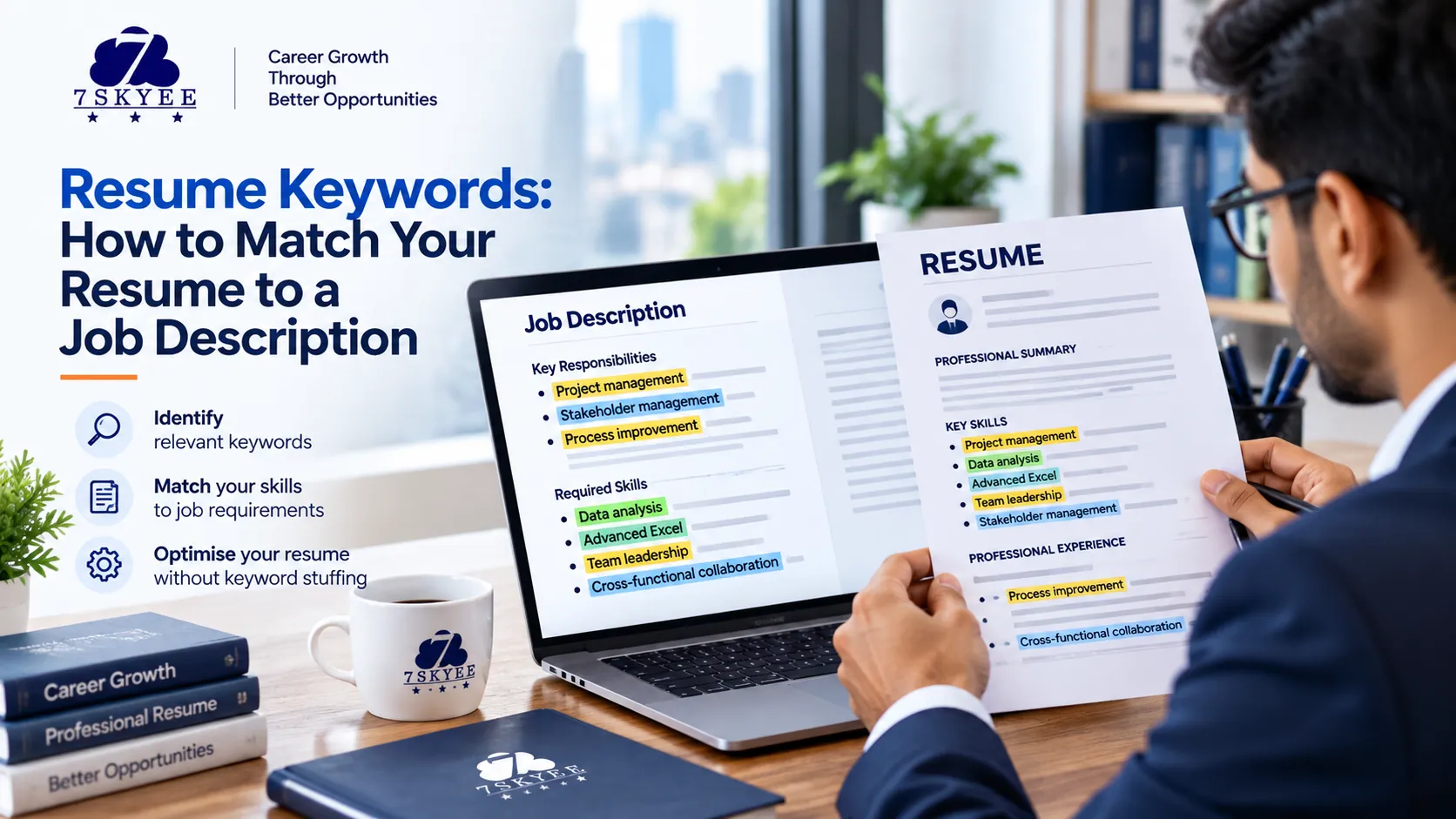
Compare your resume with the job description and identify terms that accurately reflect your experience.
Include relevant keywords in your professional summary, skills section, project descriptions and employment history where they fit naturally.
For example, a project coordination role may mention stakeholder communication, scheduling, reporting and risk tracking. If you have genuinely performed these activities, make them visible in your resume.
Do not copy the entire job description, repeat keywords excessively or claim expertise you do not possess.
For more detail, read our guide on how to match resume keywords to a job description.
Step 9: Address Your Career Change Without Apologising for It
Your resume does not need to present your career transition as a weakness.
Avoid lengthy explanations about why you are leaving your previous field. The resume should focus primarily on your relevant capabilities and suitability for the new role.
A brief target-role headline can help establish your direction.
For example:
Operations Professional | Process Improvement | Project Coordination
This can be appropriate if those areas genuinely reflect your experience and target role.
Your cover letter or interview can provide additional context about why you are making the transition and how you have prepared for it.
Be realistic about your seniority. If you are entering a new profession, you may need to target a role that recognises your transferable experience while allowing you to build domain-specific expertise.
Step 10: Tailor Your Resume for Each Target Role
One career change may lead to several possible job titles. A single resume is unlikely to communicate equal relevance to every position.
For example, a customer service professional may target customer success, operations coordination or account management. These roles overlap, but each has different priorities.
Maintain a master resume with your full and accurate career history. Then create focused versions for groups of closely related roles.
For each application, review:
The target-role headline.
The professional summary.
The order of your key skills.
The achievements you highlight.
Relevant projects and training.
The keywords that accurately match the job description.
Keep your employment history and qualifications truthful and consistent across versions.
Common Career Change Resume Mistakes
Trying to hide your previous career
Your previous experience is often the source of your strongest transferable skills. Explain its relevance instead of concealing it.
Listing skills without evidence
A list of skills is less convincing when it is not supported by examples from your work, projects or training.
Making the resume too generic
A resume that says you can work in any industry may fail to show why you are suited to a particular opportunity.
Overstating your experience in the new field
Do not change job titles or imply that you held responsibilities you did not have. Credible positioning is stronger than an exaggerated career story.
Ignoring genuine skill gaps
If a target role requires a technical skill you have not developed, identify how you can build it instead of trying to disguise the gap.
Focusing only on training
Courses can help, but employers may also want evidence of practical application, problem-solving and relevant achievements.
Career Change Resume Checklist
Before applying, confirm that your resume:
Clearly identifies the role or function you are targeting.
Explains your relevant transferable skills.
Uses a professional summary suited to your new direction.
Highlights achievements that demonstrate relevant capabilities.
Includes relevant projects and training where appropriate.
Uses accurate job-related keywords.
Preserves a truthful and clear employment history.
Uses readable, consistent formatting.
Addresses the most important requirements in the job description.
Presents a credible explanation of your career transition.
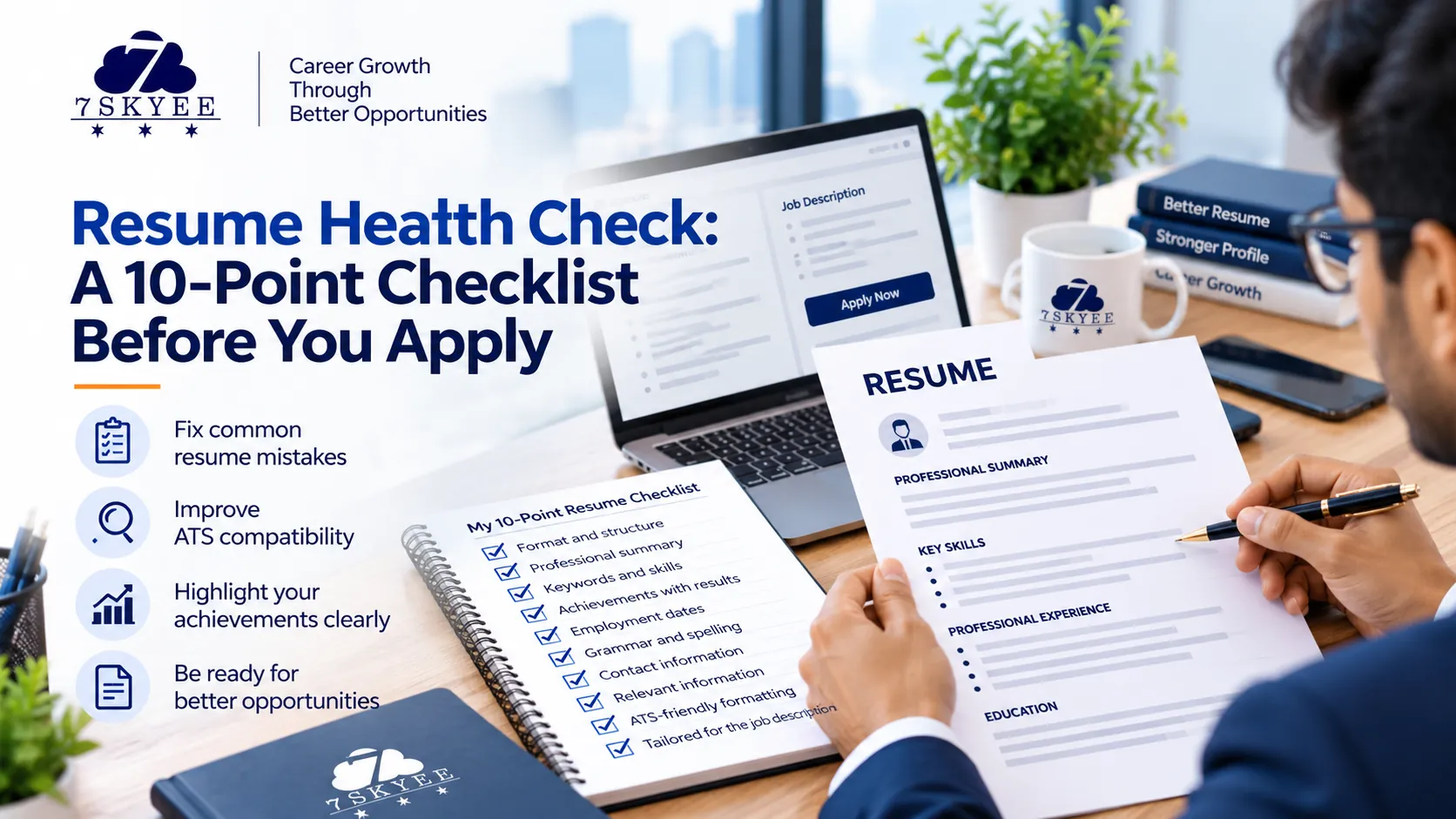
For a final review, use our 10-point resume health check.
When Professional Resume Writing Support May Help
A career change can be difficult to communicate because your strongest achievements may belong to a profession that the new employer does not immediately recognise as relevant.
Professional resume writing support can help you organise your experience, identify transferable capabilities, prioritise relevant achievements and position your profile for the roles you want to pursue.
This can be particularly useful if you are changing industries, moving from a technical role into management, returning to employment after a break or targeting a new function after many years in one profession.
Explore 7Skyee Professional Resume Writing Services to learn how your resume can be structured around your target role.
If you are still uncertain about which direction to pursue, Career Counselling may help you assess your strengths, interests and options before finalising your career transition plan.
Frequently Asked Questions
Should I mention my career change in my resume?
You can communicate your intended direction through your headline, summary, relevant skills and projects. A lengthy explanation is usually unnecessary in the resume itself.
Can I change careers without direct experience in the new field?
Yes, depending on the role and its requirements. Transferable skills, relevant projects, training and demonstrable achievements may help you compete for suitable positions. Some roles will still require specific qualifications or practical experience.
Should I remove unrelated jobs from my resume?
Not automatically. Keep your employment history accurate, but reduce the detail devoted to roles that are less relevant. Highlight responsibilities and achievements that support your target position.
Is a functional resume better for career changers?
Not necessarily. A hybrid or reverse-chronological format with a focused summary and skills section often preserves credibility while making transferable experience visible. Choose a format that fits your career history and target industry.
How long should a career change resume be?
There is no universal length. Include enough information to establish your relevant experience and suitability without unnecessary repetition. Follow any specific employer instructions.
Can a professionally written resume guarantee a career change?
No. A resume cannot guarantee an interview or job offer. It can, however, help communicate your genuine skills and experience more clearly and make your application more relevant to the opportunities you pursue.
Present Your Experience for Your Next Career Move
A career change does not mean starting from zero. Your previous work may have developed valuable capabilities that can support your next step—but employers need to understand how those capabilities relate to the role.
Identify your target position, demonstrate your transferable skills, highlight relevant achievements and be honest about the experience you still need to develop.
Ready to reposition your experience for a new career direction?
Explore 7Skyee Professional Resume Writing Services and build a resume focused on the opportunities you want next.