
In today's highly competitive job market, your resume is much more than a document listing your qualifications and work experience. It is your personal marketing tool, your professional introduction, and often the deciding factor in whether you receive an interview invitation.
Recruiters spend only a few seconds scanning each resume before deciding whether to continue reading or move on to the next applicant. With hundreds of applications submitted for a single vacancy, employers simply don't have the time to study every resume in detail.
This means your resume has one critical job—to convince the recruiter that you are worth interviewing.
Unfortunately, many talented professionals miss excellent career opportunities because their resumes fail to communicate their true value. They may have the right skills, relevant experience, and impressive achievements, but if these strengths are not presented effectively, employers may never discover them.
This is where professional resume writing makes a significant difference.
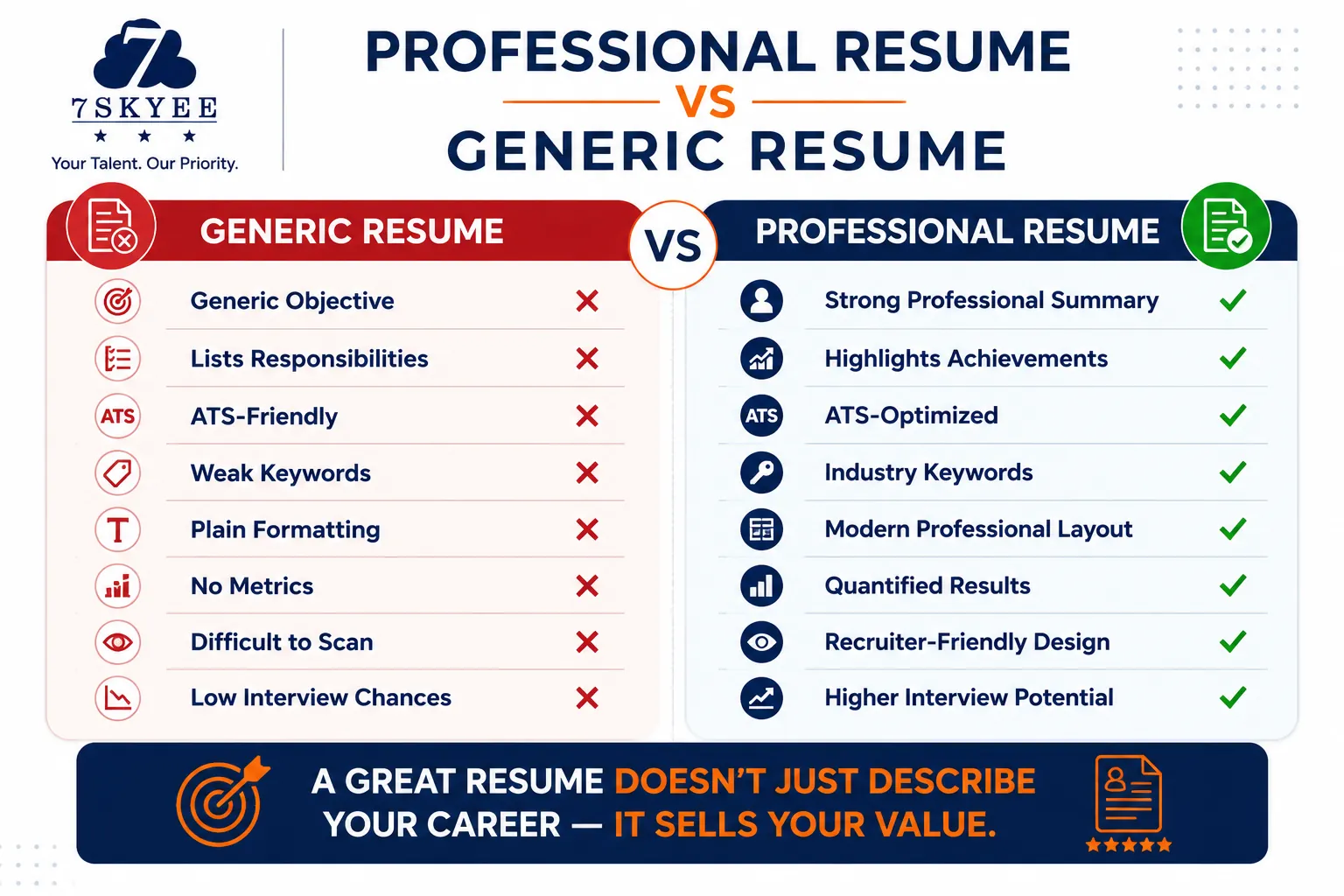
A professionally written resume does more than improve grammar or formatting. It strategically presents your career story, highlights measurable achievements, incorporates relevant industry keywords, and is optimized to pass Applicant Tracking Systems (ATS). The result is a resume that not only looks professional but also increases your chances of getting shortlisted.
Whether you are a fresher entering the workforce, an experienced professional seeking career growth, or an executive pursuing leadership opportunities, investing in your resume is one of the smartest career decisions you can make.
Why Your Resume Matters More Than Ever
Today's hiring process is very different from what it was a decade ago.
Earlier, recruiters manually reviewed every application they received. Today, organizations receive hundreds—and sometimes thousands—of resumes for a single opening. To manage this volume, many companies rely on technology before a recruiter even sees your application.
As a result, your resume must succeed in two stages:
First, it needs to pass automated screening software.
Second, it must convince a recruiter that you are the right candidate.
If your resume fails at either stage, your application may never progress further, regardless of your actual abilities.
Think of your resume as your first interview.
Before an employer meets you, speaks to you, or evaluates your skills, they evaluate your resume. It becomes the first impression of your professionalism, communication ability, and career achievements.
A strong resume demonstrates that you understand your industry, communicate effectively, and take your career seriously.
A weak resume suggests the opposite.
Why Most Resumes Never Reach Recruiters
Many job seekers assume that once they click the "Apply" button, their resume reaches a recruiter's desk.
In reality, this often doesn't happen.
Large organizations use Applicant Tracking Systems (ATS) to filter applications before a recruiter reviews them.
These systems scan resumes for relevant information such as:
Job titles
Skills
Industry keywords
Years of experience
Education
Certifications
Technical expertise
If your resume doesn't contain the right information—or isn't formatted correctly—it may be rejected automatically.
This explains why many professionals apply for dozens of jobs but receive very few interview calls.
It isn't always because they lack qualifications.
Often, it's because their resume never reaches the hiring manager.
Understanding Applicant Tracking Systems (ATS)
An Applicant Tracking System, commonly known as ATS, is recruitment software used by employers to organize, filter, and rank job applications.
Instead of manually reviewing every application, recruiters search within the ATS using specific keywords related to the role.
For example, if a company is hiring a Supply Chain Manager, the ATS may prioritize resumes containing terms such as:
Supply Chain Management
Inventory Control
Vendor Management
Procurement
SAP
ERP
Logistics
Demand Planning
If these relevant keywords are missing, even a highly qualified candidate may rank lower than applicants whose resumes better match the search criteria.
However, ATS optimization isn't about stuffing your resume with keywords.
A professional resume integrates industry-specific terminology naturally while maintaining readability for human recruiters.
The goal is to satisfy both technology and people.
Common Resume Mistakes That Cost Candidates Interviews
Many resumes fail not because candidates lack experience, but because they make avoidable mistakes during resume preparation.
Here are some of the most common issues recruiters encounter.
1. Listing Responsibilities Instead of Achievements
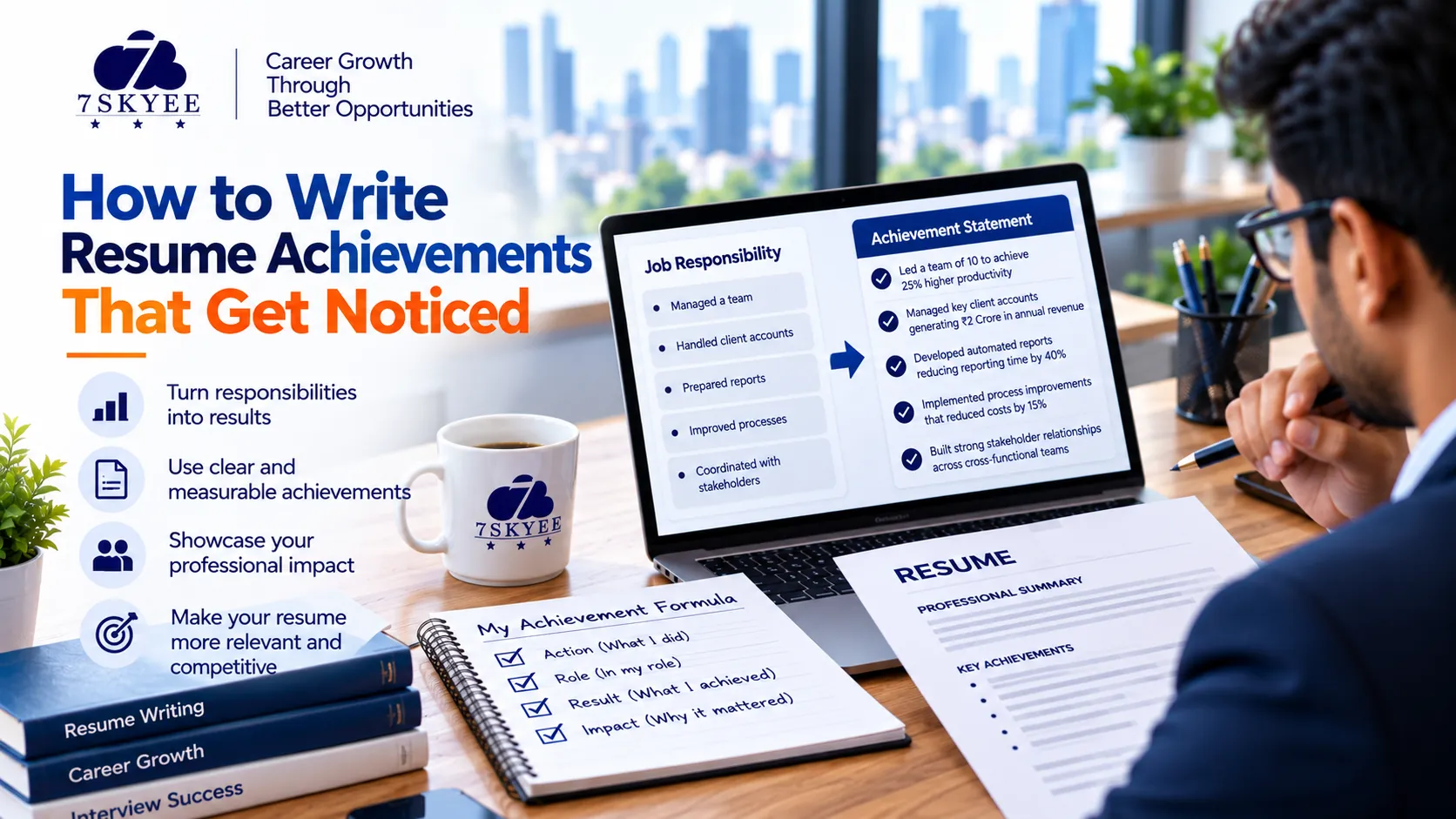
Many resumes simply describe day-to-day responsibilities.
For example:
"Responsible for managing a sales team."
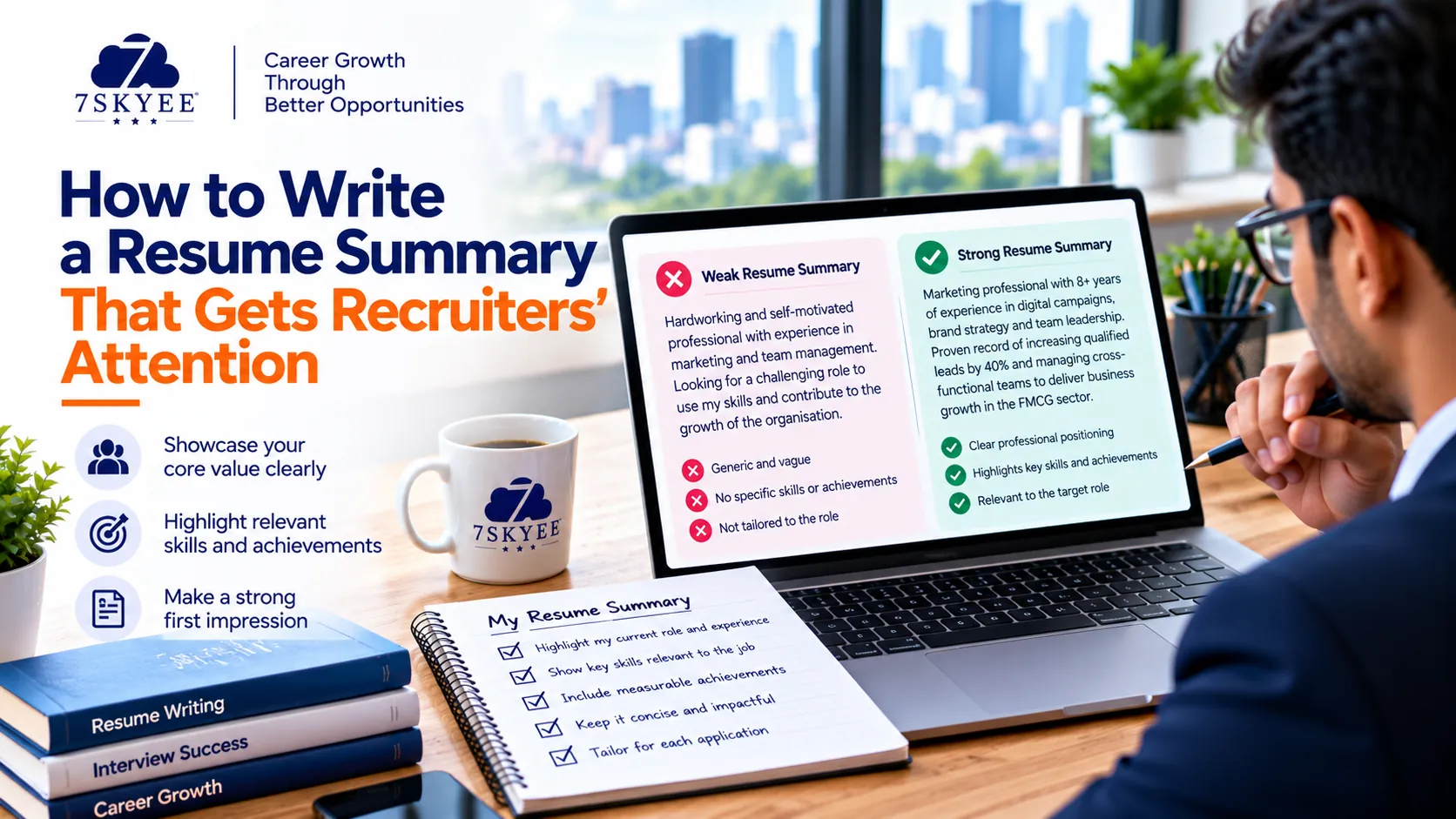
A stronger approach demonstrates measurable impact.
For example:
"Led a team of 12 sales professionals and increased regional revenue by 28% within one financial year."
Achievements immediately show employers the value you can bring to their organization.
2. Using a Generic Resume for Every Job
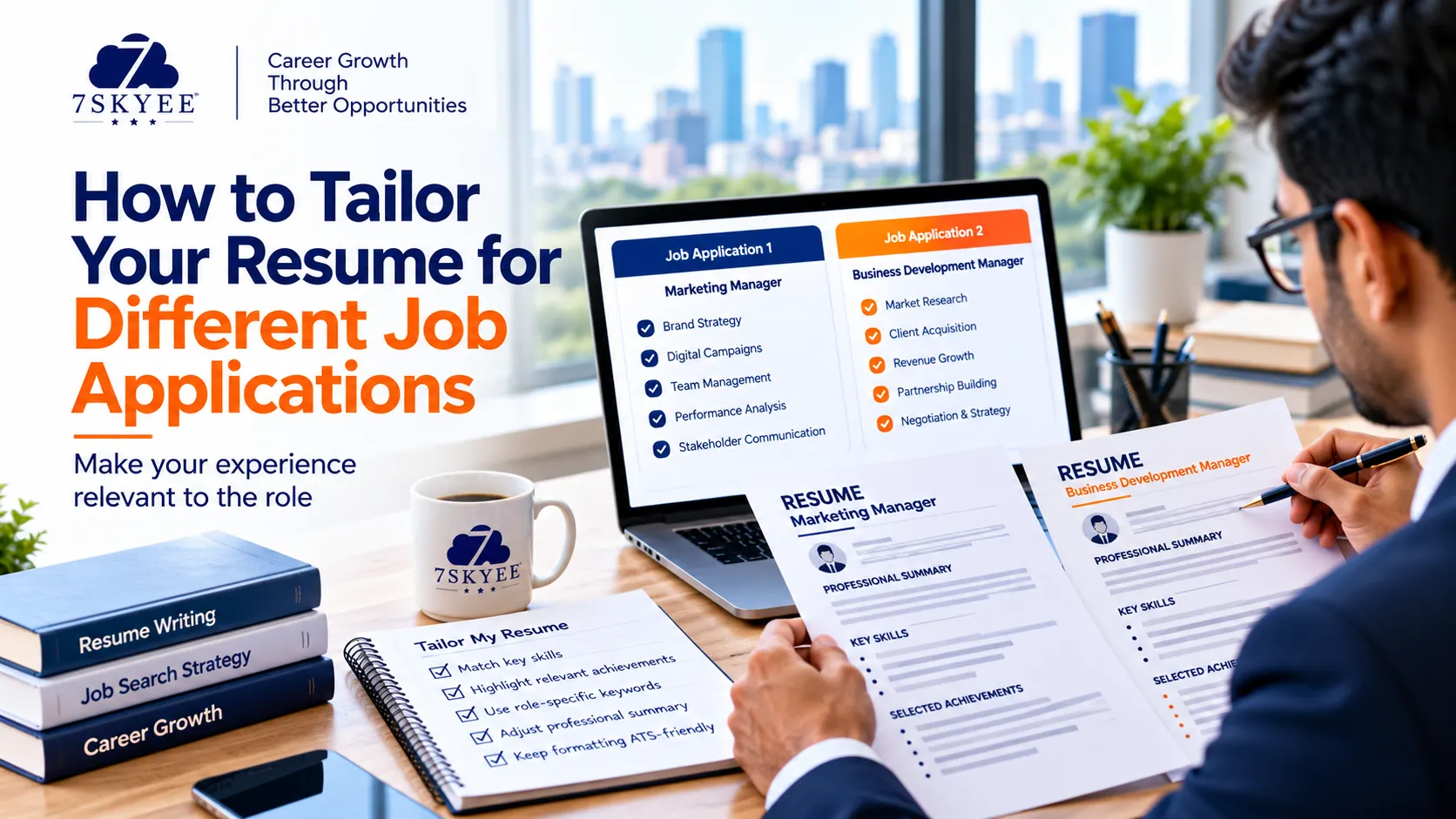
One resume cannot effectively target every industry or role.
Recruiters expect resumes to reflect the specific requirements of the position.
Customizing your resume for each application significantly improves your chances of passing ATS screening and attracting recruiter attention.
3. Poor Formatting
A cluttered layout, inconsistent fonts, excessive colors, and lengthy paragraphs make resumes difficult to read.
Professional resumes use:
Clean formatting
Consistent typography
Clear section headings
Appropriate white space
Logical information hierarchy
A well-designed resume allows recruiters to quickly identify your strengths.
4. Ignoring Keywords
Many candidates overlook the importance of incorporating relevant keywords from the job description.
Without these terms, ATS software may not recognize your resume as a strong match for the role.
Including appropriate keywords naturally throughout your resume improves both ATS compatibility and recruiter relevance.
5. Focusing on Duties Instead of Results
Employers aren't only interested in what you did.
They want to know:
What did you achieve?
What problems did you solve?
What improvements did you deliver?
What measurable impact did you create?
A results-oriented resume is far more persuasive than one that simply lists responsibilities.
6. Outdated Information
Many professionals continue using the same resume for years without updating:
Skills
Certifications
Recent projects
Promotions
Awards
Professional achievements
Your resume should evolve alongside your career.
A professionally written resume is not simply about using better words or creating an attractive layout. It is about presenting your career in a way that aligns with employer expectations and highlights your unique value.
Professional resume writers understand how recruiters evaluate resumes, what hiring managers look for, and how Applicant Tracking Systems (ATS) rank applications. This expertise helps transform an ordinary resume into a powerful career marketing document.
Here are some of the key benefits.
1. Better First Impressions
Your resume is often the first interaction an employer has with you.
A professionally designed resume immediately communicates professionalism, attention to detail, and credibility. It creates confidence before the interview even begins.
2. Improved ATS Compatibility
Many candidates are rejected simply because their resumes fail ATS screening.
Professional resume writers understand how ATS software works and ensure your resume includes the right structure, formatting, and industry-specific keywords without compromising readability.
This significantly increases the chances of your application reaching a recruiter.
3. Achievement-Oriented Content
Recruiters are interested in results—not just responsibilities.
Professional resume writers convert routine job descriptions into measurable achievements that demonstrate your contribution.
Instead of saying:
"Managed customer service operations."
A stronger statement would be:
"Improved customer satisfaction scores by 25% while reducing complaint resolution time by 30%."
Employers remember achievements because they demonstrate business impact.
4. Strong Personal Branding
Every professional has a unique career story.
A professionally written resume identifies your strengths, highlights your expertise, and presents a consistent personal brand throughout the document.
Whether you specialize in finance, manufacturing, sales, HR, IT, or operations, your resume should clearly communicate your professional identity.
5. Increased Interview Opportunities
Ultimately, the purpose of a resume is not to get a job—it is to secure an interview.
A resume that is easy to read, ATS-friendly, achievement-focused, and tailored to the role naturally generates more interview opportunities.
How 7Skyee Creates Interview-Winning Resumes
At 7Skyee Consultancy Pvt. Ltd., we believe that every professional deserves a resume that accurately reflects their capabilities and career aspirations.
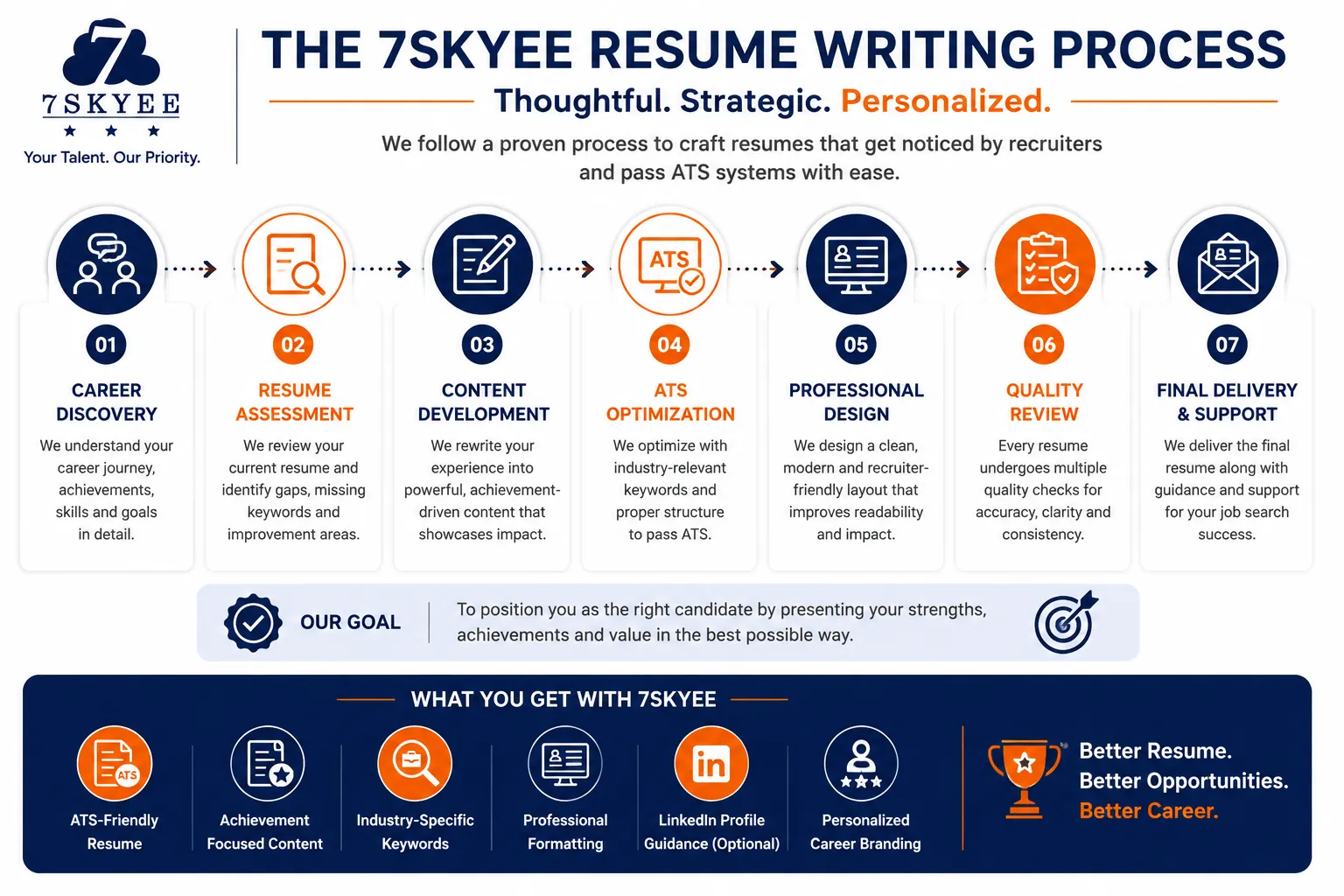
Our resume writing process goes beyond editing existing content. We work closely with candidates to understand their background, achievements, and future goals before creating a customized resume.
Our process includes:
Career Discovery
We begin by understanding your professional journey, responsibilities, accomplishments, and career objectives.
Resume Assessment
Our experts evaluate your existing resume to identify weaknesses, missing information, formatting issues, and ATS compatibility.
Content Development
Rather than copying job descriptions, we rewrite your experience using clear, achievement-oriented language that highlights measurable contributions.
ATS Optimization
We incorporate industry-relevant keywords naturally to improve compatibility with Applicant Tracking Systems while ensuring the document remains engaging for human recruiters.
Professional Design
We apply a clean, modern layout that improves readability without distracting from the content.
Quality Review
Every resume undergoes multiple quality checks before final delivery to ensure consistency, accuracy, and professionalism.
Our objective is simple—to help you present your best professional self with confidence.
Common Myths About Resume Writing
Many job seekers delay updating their resumes because they believe common misconceptions about the hiring process.
Let's address some of the most frequent myths.
Myth 1: "My Experience Speaks for Itself."
Experience is valuable, but employers only know what they can clearly understand from your resume.
Even highly qualified professionals can miss opportunities if their achievements are poorly presented.
Myth 2: "One Resume Is Enough for Every Job."
Different employers look for different skills and qualifications.
Tailoring your resume to match each opportunity significantly improves your chances of being shortlisted.
Myth 3: "A Longer Resume Is Better."
More pages do not necessarily create more value.
Recruiters prefer resumes that communicate relevant information clearly and concisely.
Quality always matters more than quantity.
Myth 4: "Fancy Designs Guarantee Interviews."
Creative layouts may look attractive, but many ATS platforms struggle to process complex formatting.
A professional resume balances visual appeal with technical compatibility.
Myth 5: "Professional Resume Writing Is Only for Executives."
Professionally written resumes benefit candidates at every career stage.
Whether you're entering the workforce, changing industries, seeking a promotion, or applying for leadership positions, a well-crafted resume increases your competitive advantage.
Investing in Your Career
Most professionals willingly invest in education, certifications, and technical training to improve their careers.
However, they often overlook the document that introduces those qualifications to employers.
Your resume is an investment—not an expense.
A single interview opportunity resulting from a stronger resume can lead to career growth, higher salary, and better long-term prospects.
Considering the potential return, professional resume writing is one of the most valuable investments a job seeker can make.
Final Thoughts
Your resume is often the deciding factor between being shortlisted and being overlooked.
In today's competitive hiring environment, employers expect resumes that are clear, achievement-focused, ATS-friendly, and tailored to the position.
Professional resume writing helps bridge the gap between your experience and how employers perceive your value.
Instead of simply listing your career history, a professionally written resume communicates your strengths, accomplishments, and potential in a way that captures attention.
If your current resume isn't generating interviews, it may not reflect your true capabilities—not because you lack talent, but because your story isn't being told effectively.
A stronger resume can open doors to better opportunities, and every successful career move begins with making the right first impression.
Frequently Asked Questions
Is professional resume writing worth it?
Yes. A professionally written resume improves clarity, highlights achievements, enhances ATS compatibility, and increases the likelihood of receiving interview calls.
What is an ATS-friendly resume?
An ATS-friendly resume is designed to be easily read by Applicant Tracking Systems while remaining engaging for recruiters. It uses appropriate formatting, relevant keywords, and a logical structure.
Can a professional resume help experienced candidates?
Absolutely. Experienced professionals often have extensive accomplishments that need to be presented strategically. Professional resume writing ensures these achievements are communicated effectively.
How often should I update my resume?
You should update your resume whenever you change roles, receive a promotion, complete a major project, earn a certification, or acquire significant new skills. Even if you're not actively job hunting, reviewing it every six to twelve months is a good practice.
How long does it take to create a professional resume?
The timeline depends on the level of experience and complexity of your career history. At 7Skyee, we focus on understanding your background thoroughly so the final resume accurately represents your strengths and career goals.