A recruiter may spend only a short time on the opening section of your resume before deciding whether your experience deserves a closer look. That does not mean your summary needs dramatic language or a collection of impressive-sounding adjectives. It needs to make your professional value immediately clear.
Consider two candidates applying for a Marketing Manager position. Both have eight years of experience. Both have worked on campaigns, managed teams and contributed to business growth. Yet one opens with a generic statement about being a hardworking professional, while the other explains the kind of marketing work they have delivered and the outcomes they have achieved.
The second candidate gives the recruiter a reason to keep reading.
A well-written resume summary connects your experience to the job you want. It establishes your professional identity, highlights relevant strengths and gives the reader a clear reason to explore the rest of your resume.
What recruiters actually look for in a resume summary
When reviewing a resume, recruiters are trying to establish three things: what you do, how your experience fits the vacancy and whether your background offers evidence of the value you claim to bring.
Your summary should help answer those questions without forcing the reader to search through every role in your employment history.
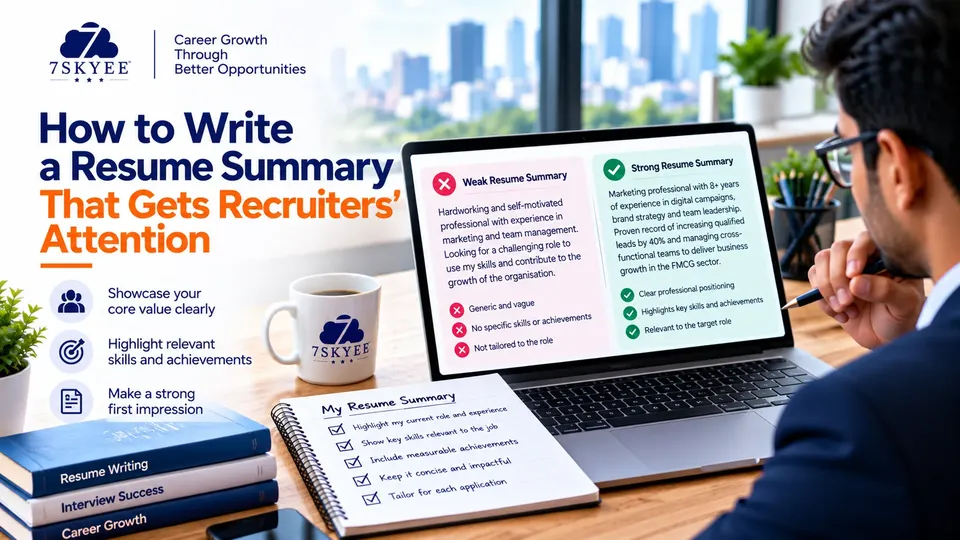
For example, “Experienced professional with excellent communication and leadership skills” tells a recruiter very little. It could describe a sales manager, a human resources professional, an operations head or a customer service executive.
Compare it with this:
Stronger example: “Talent acquisition professional with seven years of experience hiring for technology and manufacturing roles, managing stakeholder relationships and improving recruitment delivery across multiple business functions.”
The stronger version identifies the professional field, relevant experience and areas of responsibility. It is more useful because it gives the recruiter specific information to assess.
The lesson is straightforward: your summary should describe your professional value, not simply your personal qualities.
How to structure a compelling resume summary
A strong summary usually needs three or four carefully chosen elements. The emphasis will vary according to your experience, target role and industry.
Professional identity: State your current specialisation or the role for which you are positioning yourself.
Relevant experience: Include the experience, industry exposure or functional expertise that matters to your target vacancy.
Evidence of value: Highlight a meaningful achievement, area of ownership or business contribution where you have credible evidence.
Target-role relevance: Make it easy to understand why your background fits the opportunity.
You do not need to include all four elements in every sentence. The aim is to create a concise introduction that makes the rest of your resume easier to interpret.
For a senior professional, business impact and leadership scope may deserve more attention than a long list of technical skills. For someone earlier in their career, relevant projects, practical capabilities and role-specific knowledge may carry more weight.
Resume summary examples for different career stages
The right summary depends on the job you are targeting. These examples illustrate how to make the opening section more specific without overstating your experience.
Example 1: Fresher or entry-level candidate
Generic version
“Seeking a challenging position in a reputed organisation where I can use my skills and grow professionally.”
This statement describes what the candidate wants. It does not explain what they can contribute.
Stronger version
“Business administration graduate with practical experience in Excel-based reporting, market research and team projects. Interested in entry-level business operations roles requiring analytical thinking, organised execution and clear communication.”
Why it works: It identifies the candidate's educational background, relevant capabilities and intended role area. A fresher may not have extensive employment achievements, but can still demonstrate readiness through projects, internships and relevant skills.
Only include tools or experience you can genuinely discuss in an interview.
Example 2: Experienced professional
Generic version
“Results-oriented professional with 10 years of experience, excellent interpersonal skills and a proven ability to work under pressure.”
The years of experience provide context, but the remaining claims are difficult to evaluate.
Stronger version
“Operations professional with 10 years of experience across multi-location service delivery, process improvement and team management. Experienced in coordinating cross-functional teams, monitoring operational performance and improving consistency against service-level targets.”
Why it works: The summary identifies the professional's functional expertise and scope of work. If the candidate can substantiate a measurable improvement, the summary becomes stronger still.
For example, where supported by actual results, the candidate could replace a broad reference to process improvement with a specific reduction in turnaround time or operating costs.
Example 3: Sales and business development
Generic version
“Dynamic sales professional with excellent negotiation skills and a passion for achieving targets.”
The wording sounds positive but offers little evidence of the candidate's commercial contribution.
Stronger version
“B2B sales professional with six years of experience in enterprise account management, new-business development and pipeline growth. Experienced in managing client relationships, developing territory plans and converting qualified opportunities into long-term accounts.”
Why it works: It gives the recruiter a clearer picture of the candidate's sales environment and responsibilities. If the candidate has credible figures for revenue growth, target achievement or account acquisition, one relevant metric could make the summary more persuasive.
Example 4: Manager or senior leader
Generic version
“Experienced leader with strong decision-making skills and the ability to lead teams towards organisational success.”
Leadership is asserted, but its scale and business relevance remain unclear.
Stronger version
“Manufacturing operations leader with 15 years of experience across plant operations, production planning, quality improvement and team leadership. Experienced in managing operational priorities, aligning cross-functional teams and driving performance against safety, quality, cost and delivery objectives.”
Why it works: The summary establishes the operating environment, functional breadth and leadership responsibilities. For a senior role, evidence of scale—such as plant capacity, team size, multi-site responsibility or verified cost improvements—can add further credibility.
These details should be selected according to the vacancy. A recruiter hiring a plant head will assess different evidence from one hiring a supply chain director.
How to use achievements without making the summary crowded
Numbers can strengthen a resume summary, but only when they help explain the candidate's contribution.
Consider this statement:
“Responsible for sales, client relationships and business development.”
It describes duties.
Now compare:
“Managed key B2B accounts and contributed to 22% annual revenue growth across an assigned territory.”
The second version communicates a business outcome. It also gives the interviewer something concrete to explore.
However, candidates should distinguish between results they personally delivered and results achieved by the wider team. If revenue growth was a team outcome, the wording should reflect the candidate's actual contribution rather than imply sole ownership.
A useful test is to ask whether each achievement helps the recruiter understand your impact. If it does not add meaningful context, it may be better placed under the relevant employment role rather than in the summary.
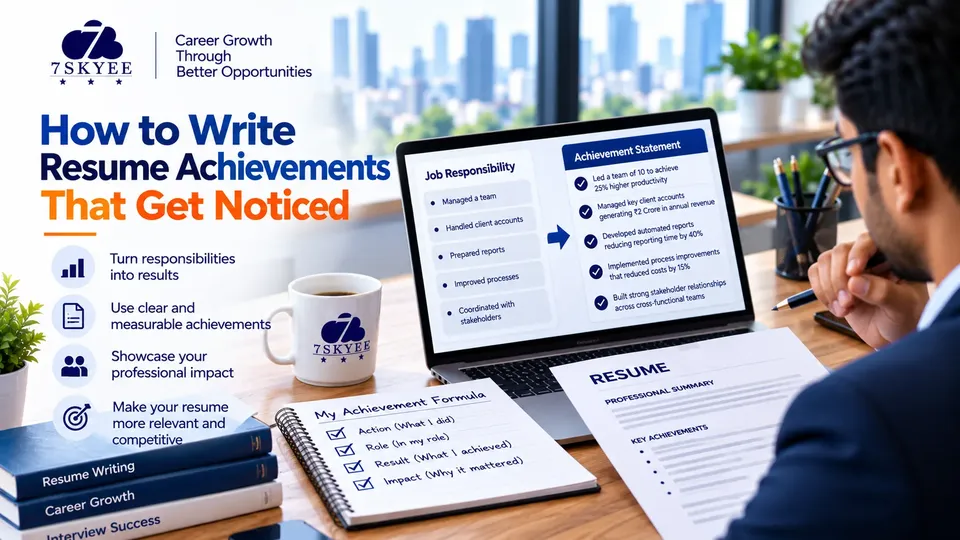
For more guidance on presenting outcomes effectively, read How to Write Resume Achievements That Get Noticed.
Should you write your resume summary before or after the rest of the resume?
Drafting the summary after reviewing the rest of your resume is often more effective.
Your employment history, projects, qualifications and achievements provide the evidence from which the summary should be built. Writing it first can encourage broad claims that are not supported by the details below.
A practical approach is to:
Identify the roles you are targeting.
Review the experience and achievements most relevant to those roles.
Select two or three strengths that distinguish your background.
Draft a short summary using specific professional language.
Check that every claim is supported by the resume.
This process also makes it easier to identify gaps between what you want to communicate and what your resume currently demonstrates.
If you have substantial experience, see How to Write a Resume for Experienced Professionals in India for further guidance on presenting your professional background.
How to tailor your summary to a specific job
A single resume summary may not work equally well for every application, especially when you are applying across different functions or industries.
Start by identifying the vacancy's central requirements. Is the employer prioritising team leadership, customer acquisition, technical delivery, cost control, stakeholder management or a specialist skill?
Then compare those requirements with your actual experience. Bring the strongest relevant evidence into the summary, while keeping your employment history accurate.
For example, a finance professional applying for a financial planning role might emphasise budgeting, forecasting and variance analysis. The same professional applying for a finance business partner position might place greater emphasis on stakeholder collaboration, commercial decision-making and translating financial information into business recommendations.
The candidate's background has not changed. The emphasis has.
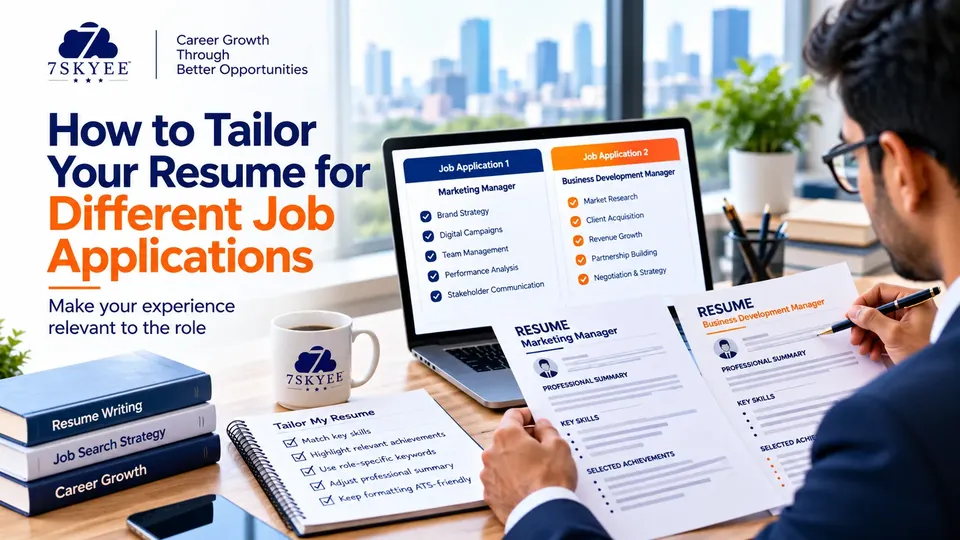
This is the principle behind tailoring your resume for different job applications: make relevant experience easier to recognise without rewriting your professional history or claiming skills you do not possess.
Resume summary mistakes that weaken an otherwise strong profile
Using empty adjectives. Words such as “dynamic”, “hardworking”, “dedicated” and “self-motivated” are not inherently wrong, but they rarely distinguish one candidate from another. Replace them with evidence of relevant expertise.
Repeating the job title without adding value. Naming yourself an “experienced project manager” is a starting point, not a complete summary. Explain the type of projects, responsibilities or outcomes that make your background relevant.
Writing a career objective instead of a summary. Statements about wanting a challenging position or career growth focus on the candidate's aspirations. A summary should primarily explain the value the candidate brings.
Including too many unrelated skills. A long list of software, personal qualities and functional capabilities can obscure your strongest selling points. Prioritise the requirements that matter for the target role.
Making unsupported claims. Do not describe yourself as an expert, strategic leader or transformation specialist unless your experience supports that positioning.
Using the same summary for every vacancy. If the roles differ significantly, your summary should reflect the most relevant aspects of your experience for each opportunity.
Repeating the entire employment history. The summary is an introduction, not a compressed version of every job you have held. Leave detailed responsibilities and supporting evidence for the employment section.
How long should a resume summary be?
For many professionals, approximately three to five concise lines is a useful starting point. The ideal length depends on career stage, role complexity and the information needed to establish relevance.
A fresher may need only two or three sentences to present education, practical skills and role alignment. An experienced manager may need a little more space to communicate functional expertise and business impact.
Senior leaders should prioritise the scope of their responsibility and the outcomes most relevant to the target position, rather than listing every career milestone.
Do not treat word count as the primary measure of quality. A short summary that says nothing specific is less effective than a slightly longer one that communicates clear, relevant evidence.
Frequently asked questions
Is a resume summary necessary for every candidate?
Not always. It can be particularly useful for experienced professionals, career changers and candidates targeting specialist or leadership positions. Freshers can also benefit when they have relevant internships, projects or skills to communicate. The summary should earn its space by adding useful context.
What is the difference between a resume summary and a career objective?
A resume summary describes your relevant background, capabilities and professional value. A career objective generally focuses on the position you want and your career aspirations. For most experienced candidates, a focused summary is usually more informative than a generic objective statement.
Should I include keywords in my resume summary?
Include relevant skills and terminology when they accurately reflect your experience and match the job requirements. Do not force keywords into every sentence. The summary should remain natural and credible, while the rest of your resume provides the detailed evidence.
Can I use the same resume summary for every job application?
You can retain a consistent professional foundation, but it is worth adjusting the emphasis when vacancies require different skills or responsibilities. Tailoring should improve relevance, not change the facts of your experience.
Your resume summary should make your value clear
The opening section of your resume is not the place to make the biggest claims. It is the place to establish the most relevant ones.
A recruiter should be able to understand your professional identity, recognise the connection between your experience and the vacancy, and find evidence of your value in the sections that follow.
Review your summary against the roles you want next. Remove vague claims, strengthen the most relevant details and ensure that every statement is supported by your experience.
If the opening section still struggles to communicate your strengths, the issue may not be your experience. It may be how that experience is being presented.
Make your experience work harder for your next opportunity
Your resume should communicate more than what you have done. It should show employers why your experience matters to the role they need to fill.
7Skyee's professional resume-writing service helps candidates present their experience through recruiter-reviewed, ATS-optimised and target-role-focused resumes.