You find two job openings that look suitable for your experience. Both offer a better career opportunity, and you meet many of their requirements. You send the same resume to both employers.
A few days later, neither responds.
The problem may not be your experience. It may be that your resume does not make the most relevant parts of that experience obvious to either employer.
Recruiters do not assess your entire career in isolation. They assess how your background relates to the position they need to fill. The same professional can be a strong candidate for two different roles, but each employer may need to see different evidence before recognising that fit.
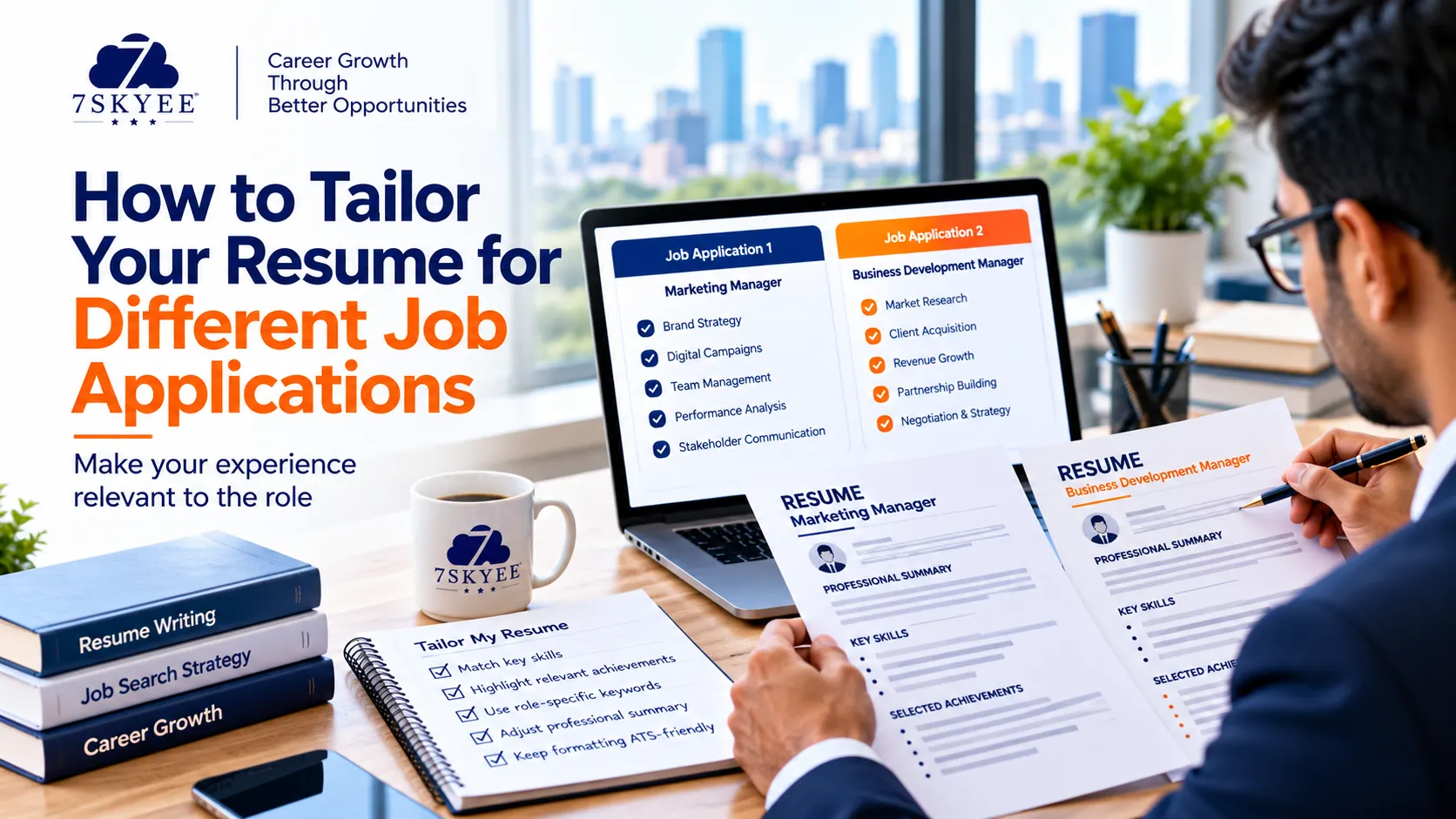
Tailoring your resume means changing the emphasis—not changing the facts. Your employment history, qualifications and achievements remain accurate. What changes is the way you prioritise and present the information most relevant to a particular opportunity.
Here is how to do that without rewriting your resume from scratch for every application.
Why One Resume Does Not Work Equally Well for Every Job
Consider a sales manager applying for two positions: Head of Sales and Business Development Director.
For the Head of Sales role, an employer may focus on team performance, sales forecasting, territory management and the ability to deliver targets.
For the Business Development Director role, the same employer—or a different organisation—may place greater emphasis on market expansion, strategic partnerships, new business opportunities and revenue growth.
The candidate's career history has not changed. The relevant evidence has.
If both applications use exactly the same summary, skills and achievement bullets, the resume may fail to communicate the candidate's suitability for either role as effectively as it could.
This is particularly important for experienced professionals. A long career can contain dozens of responsibilities and achievements, but not all of them deserve equal space in every application.
Our guide to writing a resume for experienced professionals explains why a focused professional story is more useful than an exhaustive list of everything you have done.
Start With the Job, Not Your Existing Resume
Before editing your resume, read the job description as if you were the recruiter responsible for filling the position.
Look beyond the job title. Titles can vary significantly between organisations, and the same title may involve different responsibilities.
Identify three things:
The work the person will actually perform. Look for the main responsibilities, business problems and expected deliverables.
The capabilities required to perform that work. These may include technical skills, industry knowledge, stakeholder management, leadership or analytical ability.
The evidence that would make a candidate credible. Consider what previous achievements, projects or responsibilities would demonstrate those capabilities.
For example, a job description for an operations manager might emphasise process efficiency, service delivery, team coordination and cost control. A resume that gives most of its space to customer acquisition may not immediately demonstrate the relevant operational experience—even if the candidate has successfully managed complex processes.
The first task is to identify what the employer needs to see, then locate the strongest truthful evidence in your own career.
Build a Master Resume Before Creating Targeted Versions
You do not need a completely different career history for every application. Instead, maintain one master resume containing your full, accurate professional record.
Include your employment history, major responsibilities, achievements, qualifications, relevant projects, certifications and skills.
The master document is your source material. It is not necessarily the version you should send to every employer.
When a vacancy interests you, create a targeted version using the most relevant parts of that master document.
This approach offers two advantages. It reduces the risk of forgetting important achievements, and it helps you avoid repeatedly rewriting the same content.
Keep track of your tailored versions using clear file names, such as Resume_Sales_Leadership.pdf or Resume_Business_Development.pdf. Before submitting, confirm that you are sending the correct version to the correct employer.
Tailor These Five Areas First
1. Your professional headline and summary
The opening section should establish your professional identity and make your relevance to the target role clear.
Avoid a generic summary that could describe almost any candidate. Instead, highlight the experience, expertise and value that matter most for the position.
For example, a sales professional applying for a sales leadership role might emphasise team management, forecasting, territory performance and revenue delivery.
For a business development position, the same professional might give greater prominence to market development, strategic accounts, partnerships and new business growth.
Only include capabilities that accurately reflect your experience. A headline should clarify your professional positioning, not give you a title you have never held.
2. Your key skills
Your skills section should reflect the requirements of the role rather than simply reproduce your entire professional skill set.
Suppose the vacancy emphasises project coordination, stakeholder communication, reporting and process improvement. If you possess those skills, make them easy to find.
If another position focuses on client acquisition, negotiation, account development and revenue growth, those capabilities may deserve greater prominence instead.
Do not add a skill simply because it appears in the job description. If you cannot support it with experience, training or a credible example, it may create problems later in the selection process.
3. Your professional achievements
This is often where tailoring makes the greatest difference.
A resume may contain several impressive achievements, but the most relevant ones should receive the most attention.
Imagine that an operations professional has delivered the following results:
Improved the consistency of operational reporting.
Coordinated a cross-functional project.
Reduced processing delays.
Helped resolve recurring customer service issues.
For a process improvement role, the workflow and reporting achievements may be the strongest evidence. For a project coordination role, the cross-functional project may deserve more prominence.
The achievements themselves do not change. Their order, detail and placement can change to reflect the employer's priorities.
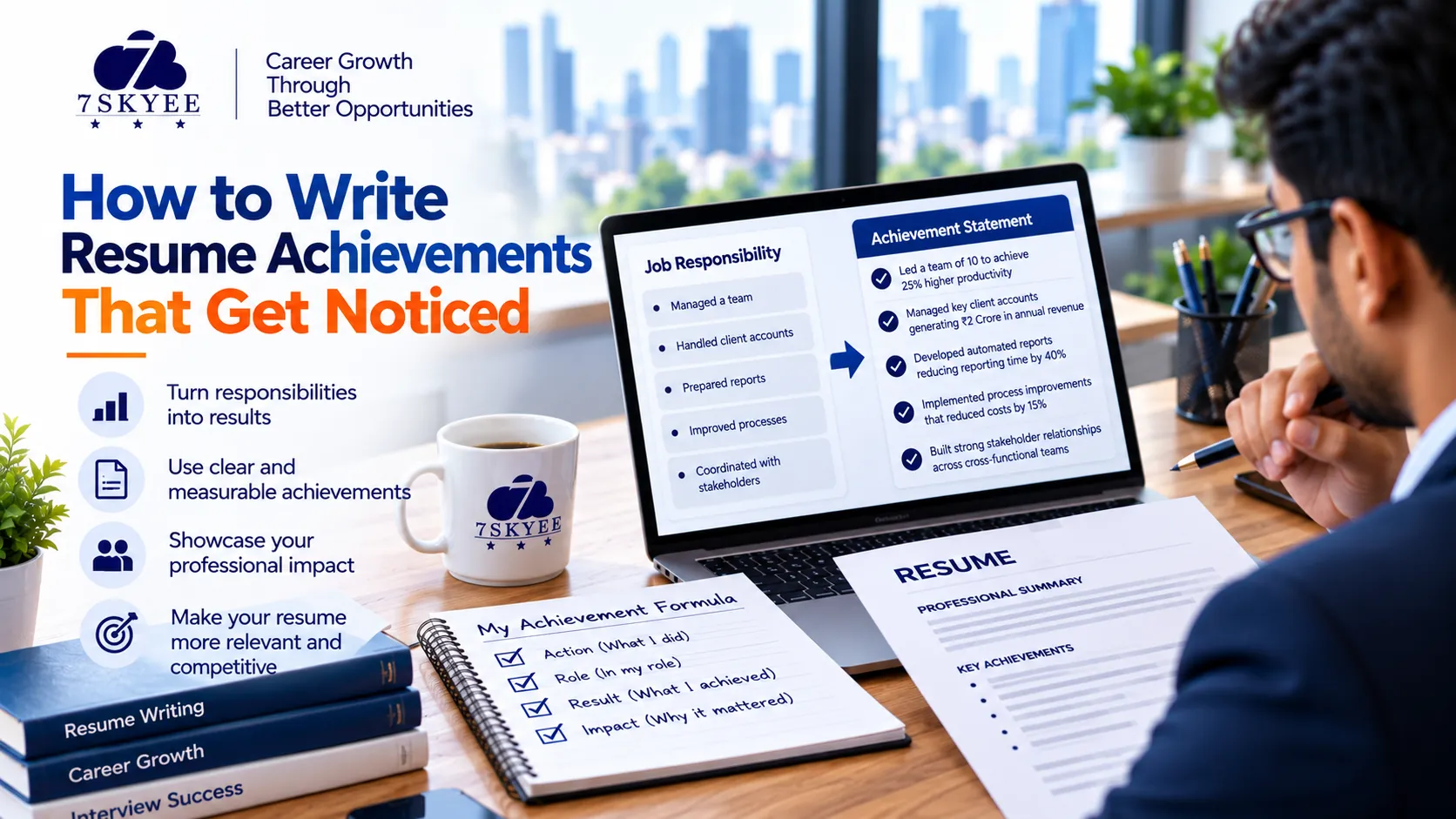
For more guidance, read our article on how to write resume achievements that get noticed.
4. Your employment history
Tailoring does not mean removing inconvenient facts or hiding previous positions. It means deciding which responsibilities from each role deserve the most detail.
For a recent and relevant position, you may include several achievement-focused bullets. For an older role that has less connection to the target job, a shorter description may be sufficient.
Preserve accurate job titles, employers and employment dates. If you held a role with a broad remit, select the responsibilities and accomplishments that demonstrate the capabilities required by the vacancy.
This is especially useful when your career has included different functions, industries or levels of responsibility.
5. Your keywords and terminology
Job descriptions often contain specific terms for skills, tools, qualifications and responsibilities. Where those terms accurately describe your experience, use them naturally in your resume.
For example, an employer may use “stakeholder management”, while your existing resume says “coordinated with internal departments and clients”. If stakeholder management accurately describes that work, using the recognised term can make the connection clearer.
This is not an invitation to copy entire sentences from a vacancy or repeat keywords excessively.
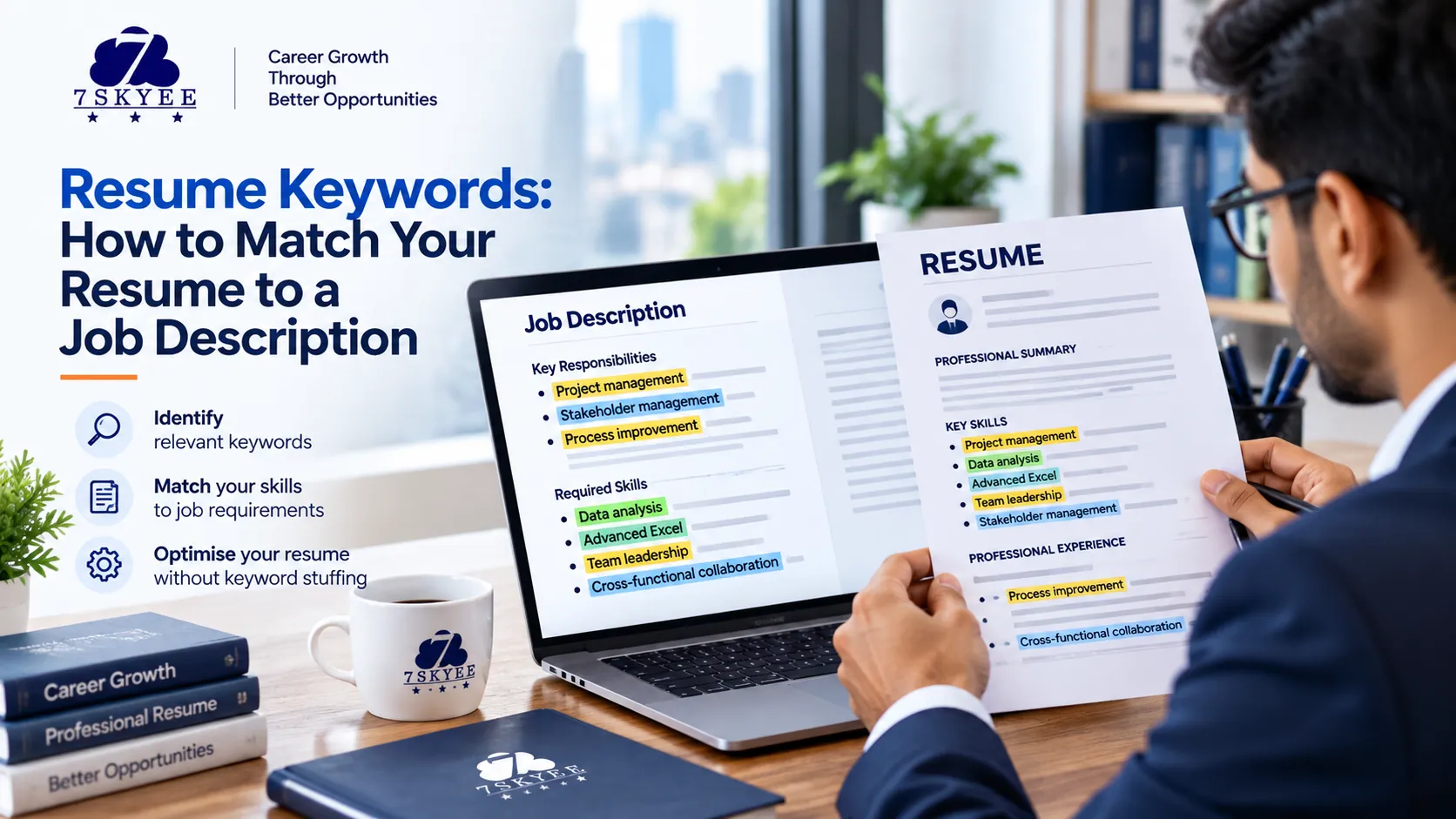
Our guide on matching resume keywords to a job description explains how to identify relevant terms and incorporate them without keyword stuffing.
A Practical Example: One Candidate, Two Different Applications
Imagine a professional with experience in sales operations, account management and team coordination.
The candidate is considering two vacancies: Sales Manager and Sales Operations Manager.
For Sales Manager, the resume could prioritise:
Sales performance and target delivery.
Customer and account development.
Team leadership and coaching.
Negotiation and stakeholder relationships.
For Sales Operations Manager, the same career history could instead emphasise:
Sales reporting and performance analysis.
Process coordination and workflow improvement.
Forecasting and data accuracy.
Cross-functional planning and operational support.
The candidate should not invent management experience or claim responsibility for systems they never used. The purpose is to identify the strongest relevant evidence already present in the career history.
This distinction is important: tailoring improves the visibility of relevant experience; it does not manufacture missing experience.
If a role requires a skill you have not yet developed, consider whether your adjacent experience, relevant training or practical projects provide a credible bridge. If the requirement is essential and you cannot demonstrate it, a different vacancy may be a better target.
How Much Should You Change for Each Application?
You generally do not need to rewrite every sentence.
Start with the sections that most influence how quickly a recruiter understands your relevance:
The professional headline and summary.
The order of your key skills.
The selection and order of achievement bullets.
The detail given to recent and relevant roles.
The terminology used to describe genuine experience.
Keep the rest of the document consistent where it remains relevant.
For example, your education, employment dates and most qualifications may not need to change between applications. Your professional summary and selected achievements may need more attention.
If you are applying for several closely related positions, one tailored version may work for that group. If the positions require substantially different capabilities, separate versions may be more appropriate.
The goal is to improve relevance without creating unnecessary work.
Tailoring Your Resume for ATS and Recruiter Review
Many employers use applicant tracking systems to manage applications. These systems can help recruiters organise and search candidate information, but their features and screening processes vary.
A targeted resume should use relevant terminology, clear section headings and readable formatting. Follow the employer's instructions about file format and application requirements.
Avoid assuming that adding more keywords automatically improves your chances. Relevance, accuracy and clear evidence remain essential.
Once the document is readable and appropriately tailored, review it from a recruiter's perspective:
Can the reader identify your professional background quickly?
Are the most relevant skills easy to find?
Do your achievements support the requirements of the role?
Is your career progression understandable?
Does the resume remain clear and consistent?
Our guide to creating an ATS-friendly resume covers structure, readability and keyword relevance in more detail.
Common Mistakes That Weaken a Tailored Resume
Changing the resume only by replacing the job title. A different headline cannot compensate for an otherwise irrelevant summary and experience section.
Adding every keyword from the vacancy. This can make the document unnatural and may suggest capabilities that your experience does not support.
Removing too much context. A relevant achievement still needs enough detail for the recruiter to understand what you did and why it mattered.
Using inconsistent versions. Different resumes can emphasise different skills, but employment dates, job titles and qualifications must remain accurate.
Overlooking the final document. Check the file name, formatting, contact information and application instructions before submission.
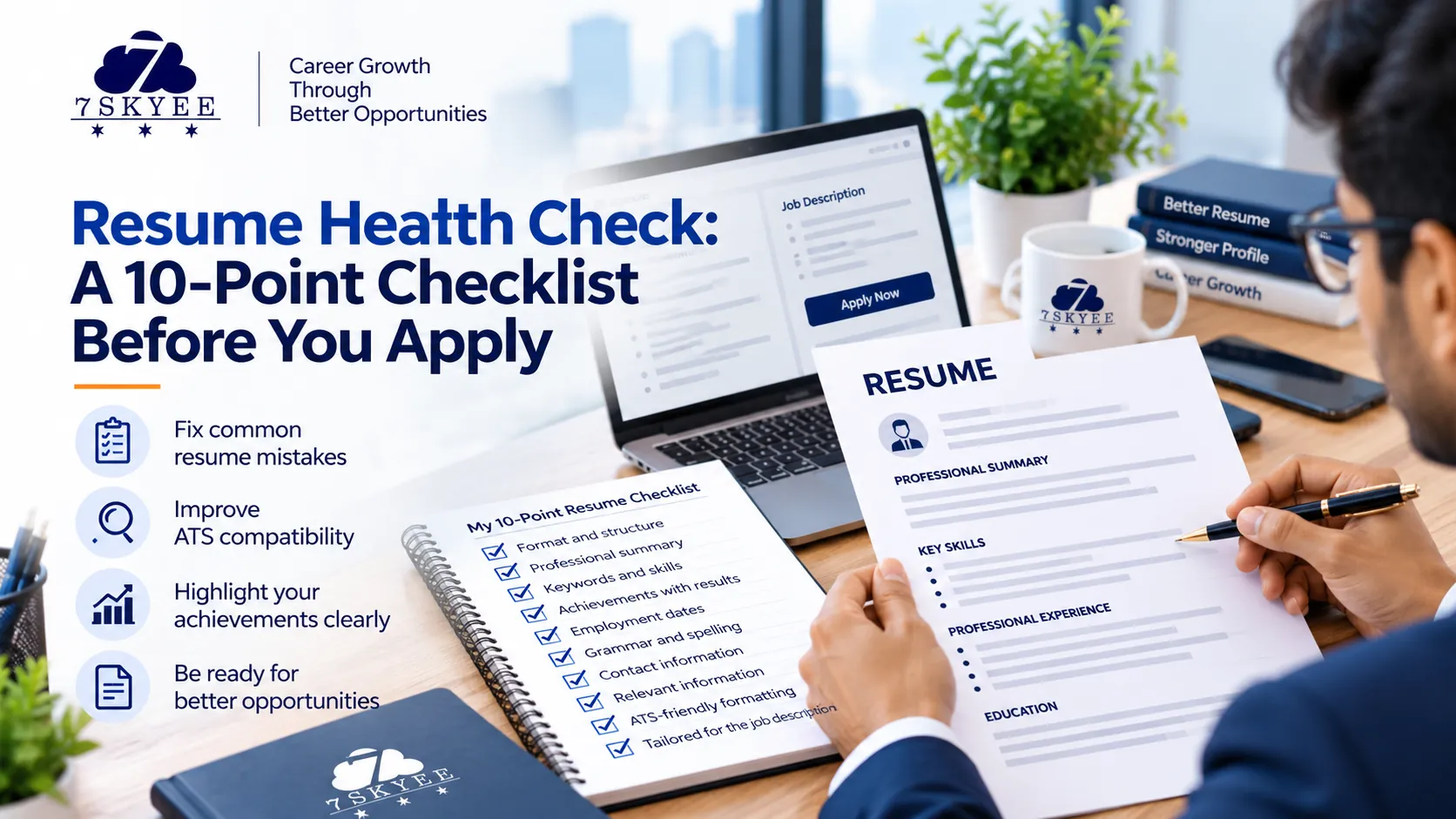
A final review is worthwhile. Use our resume health check checklist to identify common issues before you apply.
A Recruiter's Final Test
Before sending a tailored resume, ask yourself one question:
If a recruiter spent 20 seconds scanning this document, would they understand why my experience is relevant to this particular vacancy?
If the answer is unclear, revisit the opening summary, skills and first few achievement bullets.
You do not need to make every line sound impressive. You need to make the most relevant evidence easy to recognise.
Frequently Asked Questions
Should I tailor my resume for every job application?
Tailor it when the role's responsibilities, required skills or seniority differ from those of your other target positions. For closely related vacancies, you may only need to make a few focused changes.
Can I use the same resume for different industries?
You can use the same master resume as your starting point, but different industries may value different experience and terminology. Highlight transferable skills and relevant achievements without misrepresenting your background.
Does tailoring a resume guarantee more interviews?
No. Hiring decisions depend on the role, the employer's requirements, the applicant pool and many other factors. Tailoring helps communicate relevance but cannot guarantee an interview.
Should I change my job title to match the vacancy?
No. Keep your actual job title accurate. You can use a relevant professional headline or explain transferable responsibilities, but do not misrepresent your employment history.
How do I tailor my resume if I have limited experience?
Focus on relevant education, internships, projects, practical skills and genuine achievements. Prioritise the requirements you can demonstrate rather than trying to imply experience you do not have.
Make Your Experience Relevant to Your Next Opportunity
A strong resume is not a complete record of everything you have done. It is a clear, accurate presentation of the experience that matters most for the opportunity you want.
Start with a reliable master resume, understand the role, select relevant evidence and adjust the emphasis. This makes your application more focused without changing the facts of your career.
If you have strong experience but find it difficult to position that experience for different roles, explore 7Skyee Professional Resume Writing Services.
Our recruiter-led approach focuses on target-role positioning, achievement writing, relevant keywords and a resume that communicates your professional value clearly.