How to Write Resume Achievements That Get Noticed
Your resume may explain your responsibilities clearly, but does it show the value you have delivered?
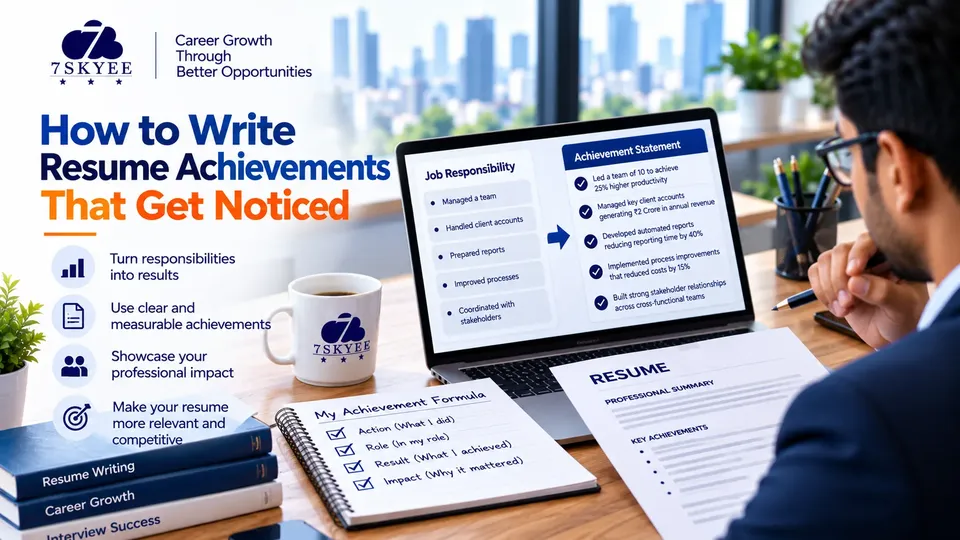
Many professionals describe their work using statements such as “managed a team”, “handled customer accounts” or “responsible for daily operations”. Although these statements explain what a job involves, they do not always demonstrate the individual's contribution or impact.
Employers want to understand how your experience relates to their requirements. Clear achievement statements help you demonstrate your capabilities through improvements, successful projects, business contributions and problems you have solved.
Whether you are applying for a promotion, changing employers or preparing for a career transition, your resume should communicate more than a list of duties. It should explain what you accomplished and why that experience matters.
In this guide, you will learn how to identify, write and present professional achievements that strengthen your resume.
What Are Resume Achievements?
Resume achievements are statements describing meaningful contributions or outcomes from your professional experience. They can demonstrate business growth, operational improvements, customer outcomes, project delivery, leadership or problem-solving.
An achievement does not have to involve a major award or a large financial result. Improving a process, resolving a recurring problem, coordinating a successful project or helping a team meet an important deadline can also demonstrate professional value.
For example:
Responsibility: Managed recruitment activities for multiple vacancies.
Achievement-focused statement: Coordinated candidate sourcing, interview scheduling and hiring-manager communication to support timely recruitment across multiple vacancies.
The second statement explains how the professional contributed to the work. If verified performance data is available, it may be strengthened further with an accurate result.
For experienced professionals, achievement-focused writing is particularly important. Our guide to writing a resume for experienced professionals explains how to present relevant experience, career progression and professional strengths effectively.
Why Achievements Make Your Resume More Effective
Recruiters may review many applications for a single vacancy. Specific achievements help them understand your contribution without having to interpret a long list of routine responsibilities.
Well-written achievements can help you:
Demonstrate your contribution to business or team objectives.
Show evidence of initiative and problem-solving.
Highlight skills that are relevant to your target role.
Support applications for promotions and senior positions.
Make your professional experience more specific and credible.
Differentiate your application from resumes that describe duties alone.
Achievements also make it easier to tailor your resume to different opportunities. A sales professional applying for a business development role may highlight customer acquisition and revenue contributions, while the same professional applying for a team leadership role may prioritise coaching, performance management and team development.
The goal is not to include every accomplishment from your career. It is to select the evidence that best demonstrates your suitability for the position.
How to Turn Job Responsibilities into Achievements
Start by reviewing your existing resume. Identify statements that describe what you were expected to do, then consider whether you can explain your contribution more clearly.
Ask yourself:
Did I improve a process or solve a recurring problem?
Did I help increase revenue, reduce costs or save time?
Did I improve service quality or customer experience?
Did I complete a project or deliver an important outcome?
Did I introduce a more effective way of working?
Did I support colleagues, develop a team or coordinate stakeholders?
Did I reduce errors, improve reporting or strengthen compliance?
Your answers can help you identify achievements that deserve a place on your resume.
Example: Sales and Business Development
Basic responsibility: Managed customer accounts and sales activities.
Achievement-focused version: Developed customer relationships, identified new business opportunities and supported account growth through targeted sales activities.
If you have reliable figures, you may add a verified result, such as revenue generated during a defined period or the number of new accounts acquired.
Example: Human Resources and Recruitment
Basic responsibility: Handled recruitment for different positions.
Achievement-focused version: Coordinated recruitment activities across multiple vacancies, improving communication between candidates and hiring managers throughout the selection process.
Where supported by records, you could also highlight improvements in time to hire, candidate experience, offer acceptance or recruitment delivery.
Example: Operations
Basic responsibility: Managed daily operational activities.
Achievement-focused version: Coordinated daily workflows, resolved operational issues and worked with cross-functional teams to improve service delivery.
If you introduced a change that reduced delays or errors, explain that outcome and include a reliable measurement where available.
These examples illustrate how to improve wording; adapt them to your actual experience rather than copying them as personal claims.
Use a Simple Formula for Strong Achievement Statements
A useful starting point is:
Action + What You Did + Result or Impact
Begin with a clear action verb. Explain the work you performed, then describe the outcome where you can support it.
For example:
Basic statement: Responsible for improving reporting processes.
Stronger statement: Redesigned recurring reporting workflows to reduce manual work and improve the consistency of management reports.
With verified evidence: Redesigned recurring reporting workflows, reducing report preparation time by 30% and enabling managers to receive performance updates earlier.
Only use the percentage if it reflects a genuine, verifiable result.
Not every achievement needs a number. If you do not have reliable figures, describe the contribution and its purpose accurately. A clear qualitative result is better than an invented statistic.
How to Quantify Your Achievements Without Exaggerating
Numbers can make an achievement easier to understand, but they should provide meaningful context rather than simply make a bullet point look impressive.
Depending on your profession, you may be able to quantify:
Revenue generated or supported.
Costs reduced.
Time saved.
Projects delivered.
Team size or scope of responsibility.
Recruitment turnaround time.
Customer satisfaction or retention.
Error rates or quality improvements.
Productivity or delivery performance.
Choose measurements relevant to your role and target position.
For example, a recruitment professional may highlight the number of vacancies filled within agreed timelines. An operations professional may focus on reduced processing time. A finance professional may describe improvements in reconciliation accuracy or reporting efficiency.
If exact figures are unavailable, do not guess. Explain the improvement without numerical claims, or consult appropriate records where access is permitted.
You should also protect confidential information. If company figures cannot be disclosed, describe the outcome at an appropriate level without revealing sensitive business data.
Choose Action Verbs That Reflect Your Contribution
Clear action verbs help make achievement statements direct and professional.
Leadership: Led, guided, supervised, mentored.
Process improvement: Improved, streamlined, simplified, optimised.
Project delivery: Delivered, completed, implemented, coordinated.
Analysis: Analysed, evaluated, identified, assessed.
Business growth: Generated, developed, expanded, strengthened.
Problem-solving: Resolved, corrected, redesigned, prevented.
Collaboration: Partnered, collaborated, facilitated, aligned.
Choose verbs that accurately describe your role. Do not write “led” if you only supported the activity, or “generated revenue” if your contribution was limited to administrative support.
The aim is to make your contribution clear, not to exaggerate your authority.
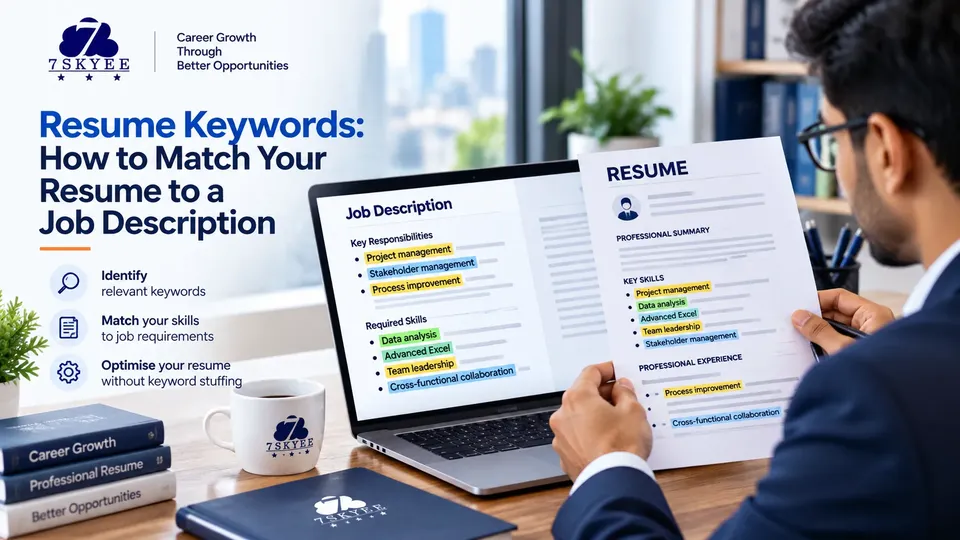
Write Achievements That Match the Job Description
A strong achievement is most useful when it demonstrates a capability the employer needs.
Before applying, review the job description and identify its most important responsibilities, skills and expected outcomes. Compare those requirements with your own professional experience.
If the role emphasises process improvement, highlight relevant examples of simplifying workflows, reducing errors or improving delivery.
If it emphasises stakeholder management, select achievements involving cross-functional coordination, client relationships or issue resolution.
If it requires leadership, demonstrate how you guided colleagues, managed priorities or helped a team achieve its objectives.
Use relevant terminology naturally when it accurately reflects your experience.
Our guide on how to match resume keywords to a job description explains how to identify and incorporate relevant skills and terminology without keyword stuffing.
How to Present Achievements for Different Career Levels
For early-career professionals
You may have limited full-time work experience, but you can still demonstrate relevant contributions through internships, academic projects, training, volunteering or part-time work.
Focus on what you personally did, the skills you applied and the outcome. Clearly distinguish academic or simulated projects from professional employment.
For experienced professionals
Prioritise achievements that demonstrate increasing responsibility, specialist expertise, business contribution and problem-solving.
Avoid repeating similar responsibilities under every job. Highlight the accomplishments that best demonstrate your value in your target role.
For managers and team leaders
Emphasise team performance, process improvements, project delivery, stakeholder relationships and employee development where these reflect your actual responsibilities.
Clarify your individual contribution to collective results.
For senior executives
Prioritise achievements that demonstrate strategic execution, organisational improvements, commercial outcomes, leadership and risk management where relevant.
Select achievements that show the scale and significance of your contribution rather than listing routine management duties.
If you are preparing for a senior-level move, our professional resume writing service can help you present your experience in a structured, role-focused format.
How to Write Achievements When Changing Careers
When moving into a new industry or function, your previous job title may not immediately communicate your suitability for the new role. Achievements can help demonstrate transferable capabilities.
For example, a customer service professional moving into customer success might highlight issue resolution, customer communication, retention initiatives and collaboration with internal teams.
An operations professional moving into project coordination could emphasise scheduling, resource coordination, progress tracking and process improvement.
Choose achievements that genuinely relate to the new position. Do not rename previous roles or imply that you have experience you do not possess.
For further guidance, read how to write a resume for a career change in India.
Common Resume Achievement Mistakes to Avoid
Listing duties without explaining your contribution
A list of responsibilities may tell recruiters what you were assigned to do but not what you accomplished.
Improve it: Explain the action you took, the problem you addressed or the outcome you supported.
Inventing numbers or exaggerating results
Unsupported percentages and financial figures can undermine your credibility.
Improve it: Use verifiable evidence or describe the outcome qualitatively.
Using vague claims
Statements such as “worked hard”, “achieved excellent results” or “performed exceptionally well” do not provide meaningful evidence.
Improve it: Explain what you did and why it mattered.
Writing overly long bullet points
Bullets that contain several unrelated tasks are difficult to scan.
Improve it: Focus each bullet on one main contribution and remove unnecessary wording.
Repeating the same achievement
Repeating similar statements across multiple roles can make your experience feel less distinctive.
Improve it: Select different accomplishments that demonstrate your progression and relevant skills.
Ignoring spelling, formatting and relevance
Even good achievements can lose impact if the resume is difficult to read or poorly tailored.
Improve it: Review the document for clarity, formatting, accuracy and relevance before submitting it.
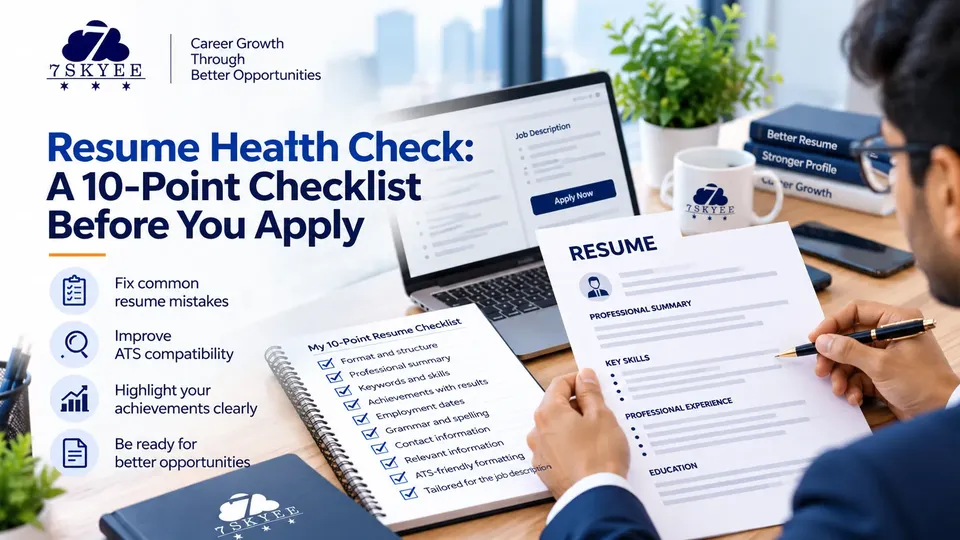
Use our 10-point resume health check for a final review before applying.
Where Should Achievements Appear on Your Resume?
Most achievements belong under the relevant position in your professional experience section. This allows recruiters to understand the context in which the result was delivered.
For selected high-impact accomplishments, a short achievements section near the top may also be appropriate, particularly for senior or specialist profiles.
Prioritise recent, relevant achievements, but retain earlier accomplishments if they demonstrate an important capability required for your target role.
Keep your formatting consistent and ensure the document remains readable. Clear headings and concise bullet points are generally preferable to elaborate layouts that make information harder to scan.
For more guidance on structure and presentation, see our resume writing services.
Your Resume Achievement Checklist
Before submitting your resume, check each achievement statement:
Does it explain what I actually did?
Does it show a result, improvement or meaningful contribution where relevant?
Are any numerical claims accurate and defensible?
Does it demonstrate a skill required for my target role?
Is the wording concise and easy to understand?
Does it avoid exaggeration or unsupported claims?
Does it add value rather than repeat another bullet point?
Is it placed under the correct job or project?
Have I checked spelling, dates and formatting?
Does the overall resume present a clear professional story?
If several statements still describe duties rather than contributions, revise them before applying.
Frequently Asked Questions
What should I write under achievements on my resume?
Include relevant contributions such as successful projects, process improvements, customer outcomes, business growth, quality improvements or team development. Choose examples that demonstrate your suitability for the target role.
What if I do not have major achievements?
You do not need a major award or dramatic business result. Improving accuracy, resolving recurring issues, coordinating work effectively or supporting a successful project can demonstrate value when described clearly.
Should resume achievements include numbers?
Use numbers when they accurately communicate the scale or impact of your contribution. If reliable figures are unavailable, explain the outcome without inventing statistics.
How many achievements should I include?
There is no universal number. Prioritise the most relevant and meaningful accomplishments for each position, giving more space to recent or relevant experience where appropriate.
Are responsibilities and achievements the same?
No. Responsibilities explain what your job required you to do. Achievements explain what you contributed, improved, delivered or accomplished. Both may be useful, but achievement-focused statements provide clearer evidence of your contribution.
Can professional resume writing improve my achievements section?
Professional support can help identify relevant accomplishments, improve wording and align your experience with target roles. You will still need to provide accurate details about your work and results.
Present Your Professional Value More Clearly
Your resume should do more than describe your previous jobs. It should help employers understand your capabilities, contributions and potential value.
Review your responsibilities, identify meaningful outcomes, choose accurate action verbs and support your statements with evidence wherever possible. Then prioritise achievements that align with the opportunities you want to pursue.
If you need help turning your experience into a clearer, more effective resume, explore 7Skyee Professional Resume Writing Services.
A well-presented resume cannot guarantee an interview, but it can help recruiters understand your professional value more quickly and clearly.