
Submitting hundreds of resumes and hearing nothing back can be frustrating.
You may have the right experience, the right qualifications and even a strong career history — yet your application may never reach a recruiter.
One reason is the Applicant Tracking System (ATS).
Most modern recruitment processes use software to collect, organize and search candidate applications. When you apply online, your resume may first be parsed into structured information such as job titles, skills, qualifications and employment history before a recruiter reviews it.
But there is an important misconception about ATS resumes in 2026:
An ATS-friendly resume is not a resume stuffed with keywords.
It is a resume that is easy for technology to interpret and valuable for a human recruiter to read.
Here is how to build one.
What Is an ATS-Friendly Resume?
An ATS-friendly resume is structured so that applicant tracking software can accurately identify and interpret the information in your resume.
An ATS may extract information such as:
Your name and contact details
Current and previous job titles
Companies you have worked for
Employment dates
Skills
Qualifications
Certifications
Education
Keywords relevant to the vacancy
Recruiters may then search or filter candidate databases using specific requirements from the job description.
That means your resume has to work for two audiences:
The machine: Can it correctly read your resume?
The recruiter: Can they quickly understand why you are suitable?
A good ATS resume does both.
1. Start With a Simple, ATS-Friendly Format
The first rule is surprisingly simple:
Do not make your resume unnecessarily complicated.
A visually impressive resume with multiple columns, graphics, icons, charts and text boxes may look attractive on screen but can create parsing problems across different ATS platforms.
Current guidance recommends a clean, straightforward layout with conventional sections and readable formatting.
A safer structure is:
Name & Contact Information
Professional Summary
Core Skills
Professional Experience
Education
Certifications
Additional Information
Use clear headings that an ATS can easily recognize.
For example:
Professional Summary
Work Experience
Education
Skills
Certifications
Avoid creative headings such as:
My Journey
What I Bring
Career Highlights
Where I've Been
They may look interesting, but conventional headings make your information easier to categorize.
2. Use the Job Description as Your Keyword Guide
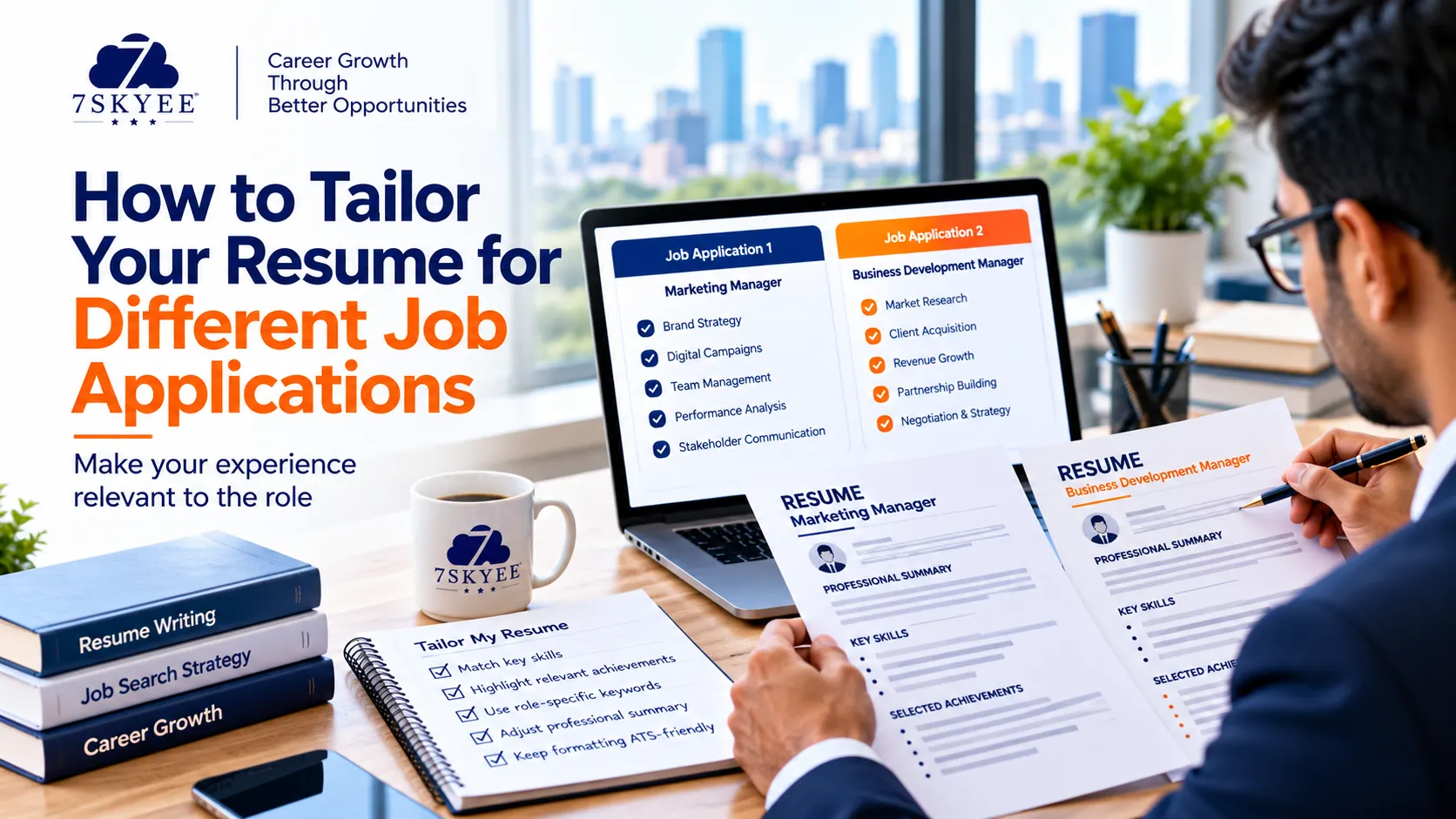
One of the biggest mistakes candidates make is writing one generic resume and sending it to every company.
In 2026, tailoring matters more than ever.
Job descriptions often contain the exact skills, technologies, qualifications and job titles that employers are looking for. Those terms can become important search criteria when recruiters filter applications.
For example, imagine a job description says:
"Looking for a Talent Acquisition Manager with experience in stakeholder management, employer branding, recruitment analytics and LinkedIn sourcing."
Your resume should not simply say:
"Experienced HR professional responsible for recruitment."
Instead, if those skills genuinely match your experience, your resume could say:
"Talent Acquisition Manager with experience in stakeholder management, employer branding, recruitment analytics and LinkedIn sourcing."
The second version creates a much clearer connection between your experience and the vacancy.
3. Match the Job Title When It Is Accurate
Your job title is one of the most important pieces of information on your resume.
Suppose a company is hiring for:
Senior Talent Acquisition Manager
Your previous employer may have called your position:
Recruitment Lead
If your responsibilities genuinely align with the target position, you can make the relationship clearer.
For example:
Recruitment Lead | Talent Acquisition Manager
However, don't invent a job title you never held.
The objective is not to manipulate the ATS.
The objective is to make your relevant experience easy to understand.
4. Put Keywords Into Context
Keyword stuffing is not the answer.
Simply creating a large Skills section containing dozens of keywords does not prove that you actually possess those skills.
Instead, demonstrate the skill through your experience.
Weak:
Recruitment, sourcing, stakeholder management, hiring, leadership, LinkedIn, interviews.
Stronger:
Managed end-to-end recruitment for mid-to-senior positions, partnering with business stakeholders and using LinkedIn sourcing strategies to build qualified talent pipelines.
The second version provides context.
It tells the recruiter how you used the skill rather than simply claiming that you have it.
Current ATS guidance similarly recommends integrating relevant keywords naturally while demonstrating accomplishments and responsibilities.
5. Use the Exact Skill When You Have It
ATS systems and recruiter searches may rely heavily on terminology from the job description.
For example, if the job description specifically asks for:
Salesforce
don't assume that writing:
CRM platform
will always communicate the same thing.
Similarly:
"Talent Acquisition" may be preferable to only saying "Hiring"
"Microsoft Excel" may be preferable to only saying "Spreadsheets"
"Project Management" may be preferable to only saying "Managing projects"
Use the terminology employers actually use — provided it accurately reflects your experience.
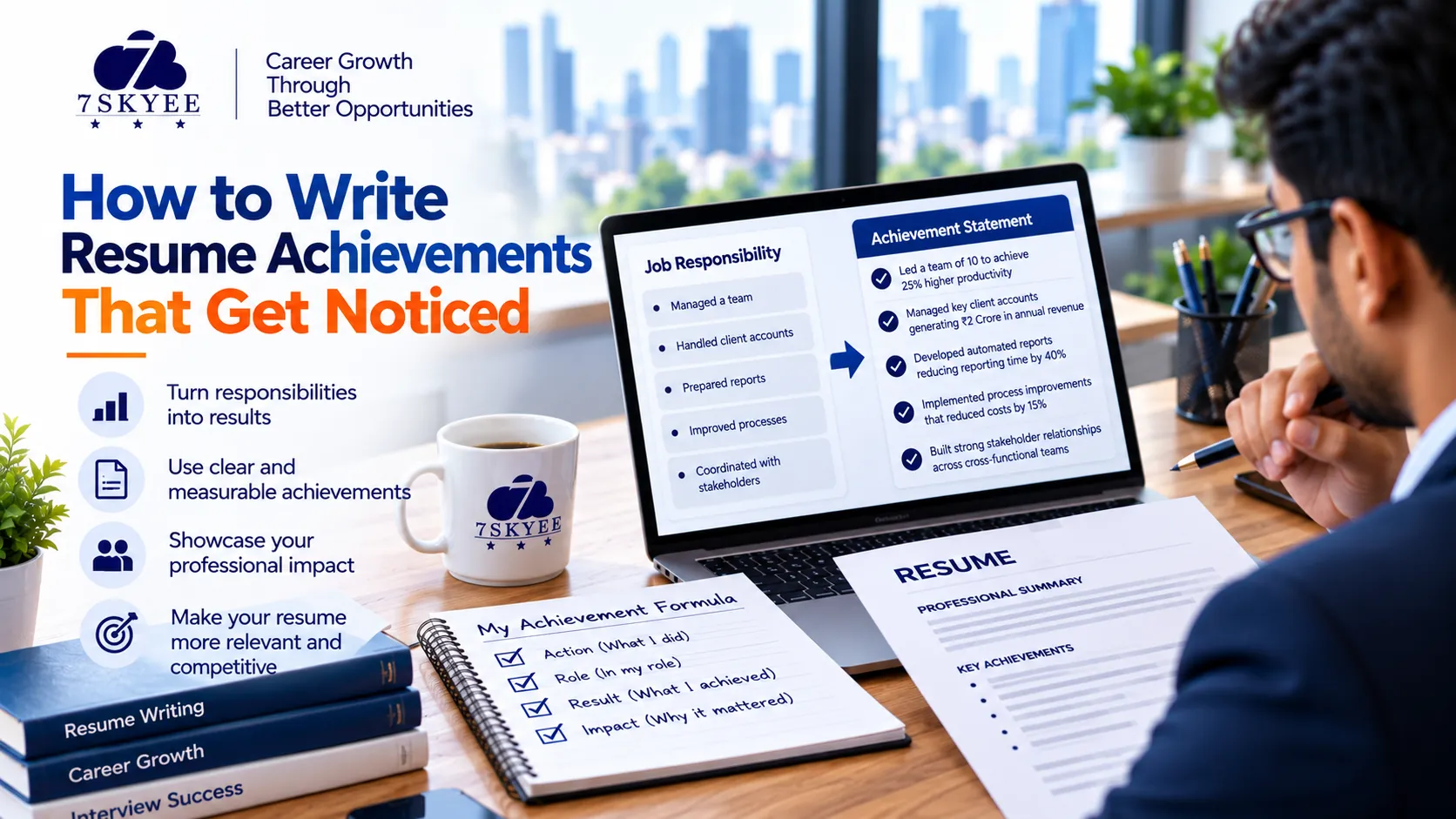
6. Make Your Achievements Searchable
Your work experience section should contain more than job responsibilities.
Recruiters want evidence of what you achieved.
Compare these two statements.
Responsibility-focused:
Responsible for recruitment across multiple departments.
Achievement-focused:
Managed end-to-end recruitment across multiple departments, reducing average time-to-hire by 24% while improving qualified candidate conversion.
The second version contains:
Recruitment
End-to-end recruitment
Time-to-hire
Candidate conversion
A measurable result
That gives both the ATS and recruiter more useful information.
Whenever possible, quantify your achievements using:
Revenue | Cost | Time | Percentage | Volume | Team Size | Targets | Growth
7. Keep Your Formatting ATS-Friendly
Your resume does not need to look boring.
It needs to be readable.
A safe ATS approach includes:
One-column layout
Standard fonts
Clear section headings
Consistent spacing
Standard bullet points
Simple date formats
Clear job titles
No unnecessary graphics
Commonly recommended fonts include Arial, Calibri, Times New Roman and Georgia.
A typical approach is:
Body text: 10–12 pt
Section headings: 14–16 pt
And don't sacrifice readability simply to force your entire career onto one page. A two-page resume can be completely appropriate, particularly for experienced professionals.
8. Avoid These ATS Problem Areas
Some design elements can interfere with how resume information is extracted or interpreted.
Be particularly careful with:
❌ Text inside images
❌ Skill bars and rating graphics
❌ Infographics
❌ Decorative icons containing important information
❌ Complex tables
❌ Multiple-column layouts
❌ Text boxes
❌ Unusual section headings
❌ Headers and footers containing critical information
For example, don't put your phone number or email address only inside a decorative header.
If the system fails to extract it correctly, the recruiter may not receive the information in the expected field.
9. Don't Hide Keywords in White Text
This is an old resume trick that candidates should avoid.
Some candidates attempt to add hidden keywords to a resume by changing the text colour to white or placing keywords in invisible areas.
Don't do it.
Your resume should accurately represent your qualifications and experience.
The goal is relevance, not manipulation.
A well-written resume naturally contains the terminology required for the position because the candidate genuinely has the relevant experience.
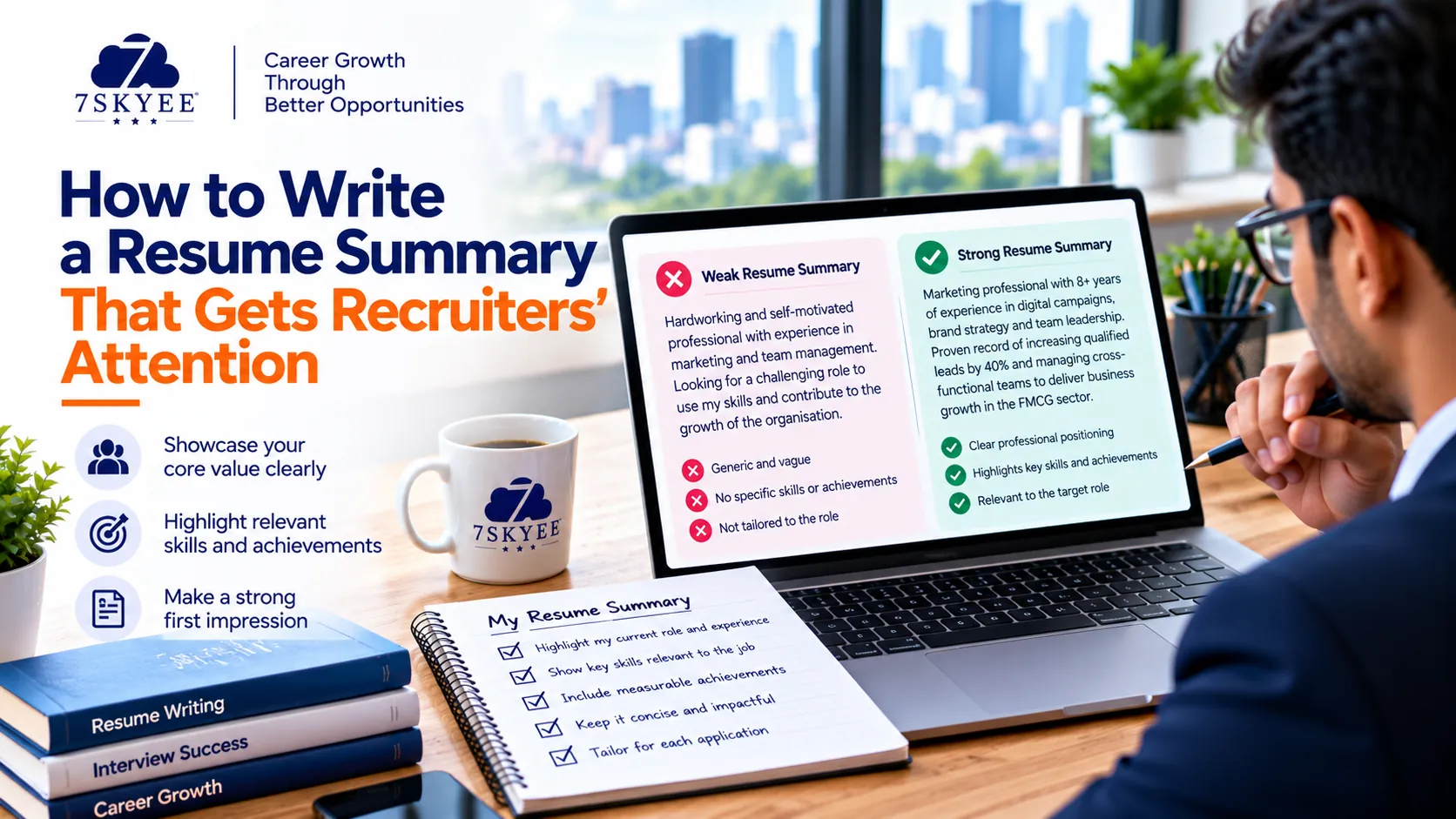
10. Your Professional Summary Matters
Your summary is not simply an introduction.
It is an opportunity to immediately establish your relevance.
Weak:
Hardworking professional looking for a challenging opportunity in a reputed organization.
This tells the recruiter almost nothing.
Better:
Talent Acquisition professional with 8+ years of experience managing end-to-end recruitment across technology and professional services. Experienced in stakeholder management, executive hiring, LinkedIn sourcing and recruitment analytics.
The second version immediately communicates:
Who you are + experience + specialization + relevant keywords.
11. Build a Strong Skills Section
Your skills section should reflect the job you are targeting.
For example, a Talent Acquisition Manager might use:
Core Skills
Talent Acquisition
End-to-End Recruitment
Stakeholder Management
Executive Search
LinkedIn Sourcing
Employer Branding
Recruitment Analytics
Candidate Experience
Interview Management
Applicant Tracking Systems
But don't add skills simply because they appear in the job description.
Every keyword on your resume should be defensible in an interview.
If you cannot explain how you used a skill, consider leaving it out.
12. Don't Forget LinkedIn and Certifications
Your resume should tell a consistent story with your LinkedIn profile.
If your resume says:
Senior Product Manager
but your LinkedIn profile says:
Product Manager
it may create unnecessary questions.
Keep important information aligned across your professional profiles.
The same applies to:
Certifications
Job titles
Employment dates
Skills
Career progression
Consistency strengthens credibility.
13. Test Your Resume Before Applying
One of the simplest checks is to copy your resume text and paste it into a plain-text editor.
Does the information remain readable?
Can you clearly identify:
Your name?
Job titles?
Companies?
Dates?
Skills?
Education?
Contact information?
If the text becomes scrambled, missing or out of order, your formatting deserves another look.
A plain-text test is also recommended as a practical way to see what a parsing system may receive from a formatted resume.
14. Create a Master Resume — Then Tailor It
You don't necessarily need to completely rewrite your resume for every application.
Instead, create a comprehensive Master Resume containing your complete career history.
Then create targeted versions based on the role.
For example:
Master Resume
↓
Talent Acquisition Manager Resume
↓
Senior Recruiter Resume
↓
HR Business Partner Resume
↓
Recruitment Head Resume
This approach saves time while allowing you to emphasize the most relevant experience for each position.
15. Remember: Passing ATS Is Not the Final Goal
This is perhaps the most important point.
You don't want to write a resume that only passes an ATS.
You want to write a resume that:
Gets parsed correctly → Matches the vacancy → Gets noticed by the recruiter → Creates enough interest to earn an interview.
An ATS-friendly resume is therefore not about "beating the machine."
It is about making your professional value clear to both technology and humans.
The 2026 ATS Resume Checklist
Before submitting your resume, ask yourself:
☐ Is my target job title clearly visible?
☐ Have I tailored my resume to this vacancy?
☐ Have I used relevant keywords from the job description?
☐ Have I used those keywords naturally?
☐ Are my achievements measurable?
☐ Is my resume easy to read?
☐ Have I avoided unnecessary graphics and design elements?
☐ Are my section headings standard?
☐ Is my employment history clearly structured?
☐ Are my skills supported by actual experience?
☐ Are my contact details easy to extract?
☐ Does my resume work when converted to plain text?
☐ Does my LinkedIn profile tell the same career story?
☐ Have I checked the final file before submitting?
If you can confidently answer yes to these questions, your resume is much better positioned for modern screening processes.
Final Thought
In 2026, having a good career history is not enough.
Your resume has to communicate that career history effectively.
The best ATS resume isn't the one containing the most keywords.
It is the one that combines:
Relevant keywords + clean structure + measurable achievements + accurate experience + human readability.
That's what gives your application the best chance of moving beyond the screening stage.
And remember: ATS optimization should never replace good resume writing. It should make good resume writing easier for recruiters — and technology — to understand.